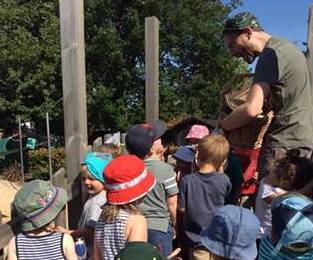
On the 10th April 2025, I was invited to speak at the Bethel Convention Centre in Sandwell as part of the authority’s Early Years Conference. Attending were representatives from lots of different agencies working in the area including schools, nurseries, The Book Trust and National Literacy Trust.
What follows is a summary of my presentation. It was not my intention to teach storytelling but instead to reflect upon its importance within early years settings. Like any further professional development, I hope that the reader finds my thoughts to be a refreshing perspective on how, through storytelling, practitioners can create a foundation for early reading and writing.
The ability to share stories is uniquely human; whether it’s at the dinner table or in the supermarket, story is a part of life and stories are shared for a multitude of reasons.
When you read a story aloud, the narrative is guided by the author’s words (however old they maybe). Storytellers don’t rely on books as prompts; their stories have been passed through oral traditions and stories can be manipulated according to their purpose and audience.
As Early Years practitioners, our audience are the children in our care but our purpose is manifold; social and emotional development, speaking and listening skills, early reading goals or simply sharing stories for pleasure, storytellers would argue that there are a wide range of soft outcomes to storytelling.
Whilst there are similarities between reading and sharing a story with a child, the most obvious difference is that a picture book is a concrete, visual resource. Where the printed page supports word recognition and imagination, it is down to the storyteller’s skill to create pictures using words. Using language for description and exposition might enhance language comprehension in ways books can’t but can the abstract nature of storytelling be a barrier for younger children?
To tell a story without any form of visual aid challenges the audience to use imagination. Imagination is the application of past learning. We can imagine because we use our previous knowledge to create new images. For example, if I am to imagine a horse I must have experienced a horse or the language that describes a horse (a larger mammal which walks on four legs with a mane and a tail). Without the appropriate learning, imagination is likely to be an effort for an early learner.
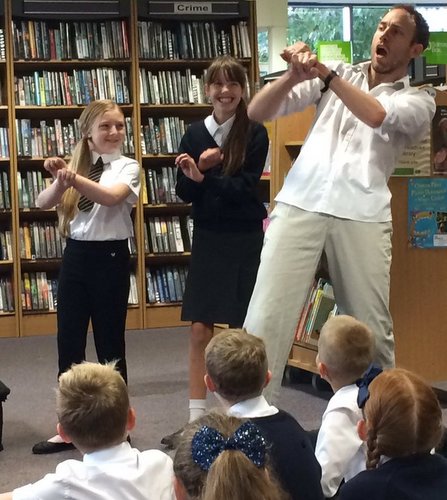
Effective storytelling in early year’s settings means helping the audience to imagine by scaffolding stories using suitable prompts. As well as books, prompts for storytelling might include pictures, objects and environments. A carefully chosen picture of something familiar (a market or a birthday party) can act as a prompt for story. By using gentle probing questions, an early year’s practitioner might encourage their children to tell stories based on their own experiences. By offering objects for exploration or discussion, practitioners help children construct stories using their knowledge (factuality is another conversation). When planning the children’s environment, our choices can lead to imaginative play and storytelling. Music, puppets, art, celebrations, events and festivals can also be great prompts for children to share stories.
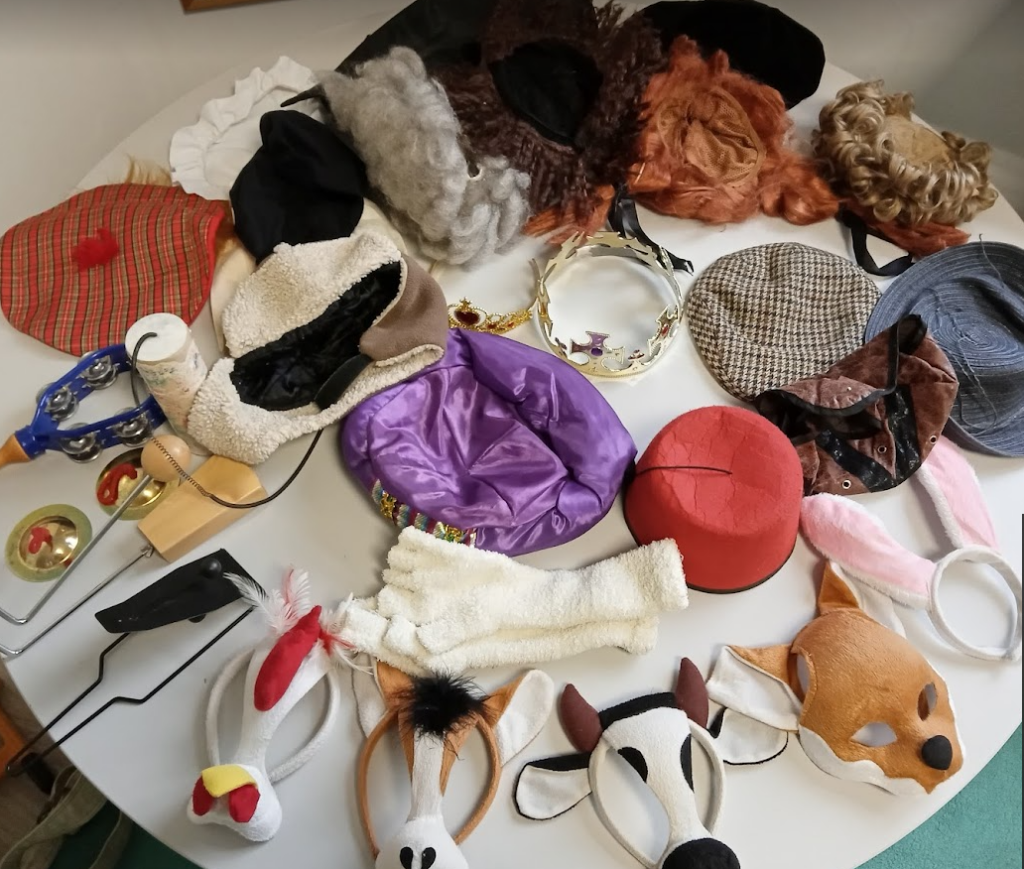
None of these ideas require a practitioner to be a performer. I have found that performance storytelling using colourful props can be a fantastic vehicle for the precision teaching of language both in the UK and overseas but practitioners need to feel comfortable if technique is to become habit. I have a memorable style of demonstrative, dynamic storytelling but every storyteller is different. By modelling the sharing of stories and making effective use of opportunities to talk and play, our children will be empowered to use their imaginations, to narrate their world and rehearse their stories every day.

The most important prompt for any story must be the storyteller and the audience. The skills you will practice and the stories you will tell in your settings will have a huge impact on your children but for children to enjoy stories so must you.