Category Archives: Uncategorized

Shanghai to Stechford: reflecting on what I brought back from China.

As far as career choices go, being a storyteller who works abroad is an unusual and privileged opportunity.  The adulation of sharing a really good story with a young audience is undoubtedly precious but there are costs.  Only during the pandemic have storytellers ever really worked from home.  This means I spend a significant time away from home and loved ones. In recent years, being away from home seems to mean travelling further and further. It can be difficult to be away but, in my opinion, I have returned from recent trips with more than memories and souvenirs.

Storytelling is an art form; a craft to be honed and tweaked through practice.  I have found that storytelling to second language English speakers challenges me to reflect on my style and delivery.  If we consider the principle that what works in Shanghai will work in Stechford, after over a decade of storytelling, these international trips have forced me to evaluate my work.

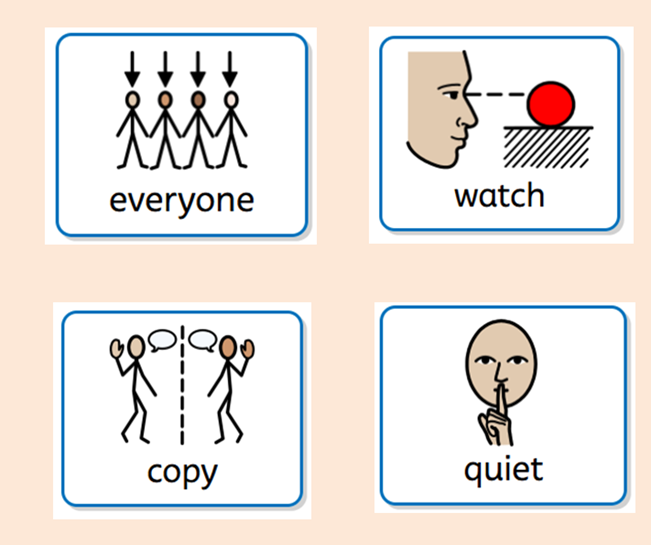
Firstly, I have employed widget symbols used in schools to improve the management and engagement in sessions.  By stripping instruction back I have found that children have a clearer understanding of my expectations in the session.  For instance, if I want compliance, applying a paralinguistic approach to a universally understood command has been far more effective than more words.

I haven’t limited my economy of language to instruction.  I know that incorporating repetition in my storytelling will help to consolidate stories for young audiences but too much repetition can slow a story’s momentum.  By using repetition in a much more targeted way in stories like The Gingerbread Man and The Enormous Turnip, I encourage participation but the pace of the delivery isn’t lost to multiple audience transitions.

Although I know a lot of stories, I am wary of presenting untested material to clients without a very good reason.  Instead, I prefer to showcase my strengths in a series of very slick sets which I offer at home and abroad.  These are stories I enjoy, that audiences like and that I know work.  These sets also include movement breaks for younger multi lingual audiences and now squirmier UK audiences!

My next change is that if I invite volunteers to the front, I do so purposefully.  Rather than the costumed child being a reference point in the background, I work to make volunteers of all ages an active part of the narrative.  Again, my interactions often involve low stakes non-verbal encouragement.  If followed, these simple actions enhance the experience for both the volunteer and the audience.  Spring cleaning the stale aspects of my stories has extended to a full audit of my equipment and retiring a number of over-loved items.  Neither of these changes would have happened without the input of staff working with children in international schools.

Whether returning from Brazil, China or the West Midlands, my baggage includes past and present experiences and mistakes.  I am comfortable with this status quo.  When I next pass through Customs I’ll declare a suitcase packed with perspective.

Progression in Poetry

This week, I was supporting children preparing for Poetry by Heart 2026; an exciting national initiative encouraging thousands of students from across the country to learn and perform poetry. This was the third time I have presented workshops relating to Poetry by Heart since I performed at their Globe Theatre Showcase in June 2023 (a day which in my 20 odd year performance career I still remember fondly).

As a storyteller, I find poetry to be a great vehicle for narrative. Often the simplicity of well chosen words cuts to the exact image an author is attempting to create and the short line form can guide a reader to the poet’s meaning much more accurately than prose. Like many forms of reading, poetry has an unfortunate stigma; it’s not accessible and it’s too complicated being just a couple of reasons given for not getting poetry. It might be fairer to say that, in some instances, an intelligently drafted poem may take several readings to make sense. This is a shame because, in a time-poor society, poetry would seem to make the perfect reading material.

In a single day I worked with eight groups from Nursery right through to Year 6 hoping to meaningfully inspire and enthuse them with the potential of learning and performing poetry. To do this, rather than presenting the same set eight times, I tried to create a progression of learning in my delivery in order to add to the children’s learning and understanding of performing poetry.

Nursery – to enjoy rhyme (Each Peach, Pear Plum)

Reception – to understand that words rhyme when their endings sound the same (Kes Grey/Ross Collins)

Y1 – to recognise that there can be different patterns of rhyme (Julia Donaldson)

Y2 – to see that a narrative poem has the same elements as a story (Rachel Bright)

Y3 – to understand that a poem flows to a rhythm (From a Railway Carriage)

Y4 – to hear that a poem can be written from the point of view of a character (Mark Grist)

Y5 – to explore the importance of being empowered by a poem (The Jabberwock)

Y6 – to use oracy skills to perform a poem (Belloc/Dahl)

It was certainly an ambitious programme and there are undeniably tweaks to be made to it but I am confident that if a child was to participate in each of the sessions during their school life, each session would add something new to their poetry toolkit which would lead to stronger performances. I am already hoping to use versions of these sessions during my upcoming tour of Argentina.

To find out more about poetry workshops and how I can support your children to better perform, understand and enjoy poems, get in touch.

The Future of Stories

In mid-October, I was invited to talk to early years practitioners about the role of talk and storytelling in early reading.  These events combined with preparation for the publication of my piece about encouraging reading for pleasure lead me to question the future of stories; what if we stopped caring about whether children could read, how might that impact story?

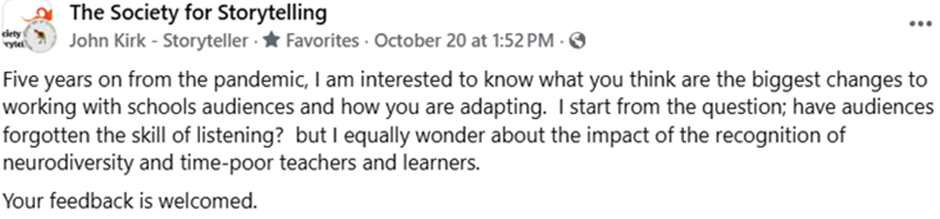
I posed a question on The Society of Storytelling Facebook page about post-pandemic storytelling in schools:

Insight came from storytellers with a range of experiences, some of whom felt very little had changed, others who believed that whilst audience behaviour may have changed the appetite and appreciation of story remained as strong as ever.  The discussion was constructive and I and myself agreeing with the opinions of my peers. Whilst some young audiences may need to be retrained in the skill of listening and responding appropriately, children love being told stories and that good storytellers have always tried to be inclusive of recognised or unrecognised neurodiversity.

Further food for thought came from author, Jeanette Winterson who was interviewed about her book One Aladdin, Two Lamps on Radio Four at the beginning of November.  When asked about the future of storytelling in a world of AI, Ms Winterson spoke effusively about the evolution of The Arabian Nights as a collection of interwoven folktales, authenticity and imagination – “Words begin in the mouth not on the page.”  She reminded listeners that mass literacy was a relatively new aspiration and that she was sure that story would survive beyond books for as long as we are interested in the human condition.

Listening to the interview, I heard many views I share and express in my own workshops about story; that oral storytelling is an ancient art form in which stories develop with the telling, that our own story is often presented to us at birth and reinforced by our circumstances and, there is great power in controlling narrative because of the potency of our mind’s reality.

I am an advocate for both reading and storytelling but although they’re challenged by similar trends and behaviours, their futures are not exclusive.  However audiences access their stories, the storytelling will always need to be championed and must continue to adapt to maintain engagement and perceived relevance.  If reading can change a life, stories can change the world.

The Society of Storytelling is a membership organisation for the promotion of storytelling across the UK.  It has thirteen thousand Facebook followers.  To find out more visit https://www.sfs.org.uk/

Jeanette Winterson was in conversation with Tom Sutcliffe and guests on Start the Week, 3/11/25.  To listen to the interview in full visit https://www.bbc.co.uk/sounds/play/m002lpdl

Image of Jeanette Winterson taken from the online Encyclopaedia Britannica

It’s time to talk about talk

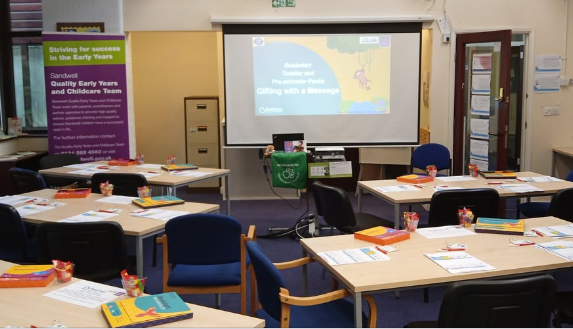
In October 2025 I was invited to West Bromwich to be part of Sandwell Children’s Services Booktrust gifting sessions.  Over five sessions I spoke with groups of Early Years Practitioners from the authority about story, its importance to young children and how we can elicit it from play.  First though, I talked about talk.

Storytelling is primarily a verbal expression of the imagination during which the storyteller creates mental pictures for their audience.  Early storytellers would have told stories as much to educate as to entertain as stories would have been used to explain the world early people found.  Effective storytelling relies upon the audience being able to create a mental picture from the storyteller’s descriptions.  The quality of the image a storyteller creates will depend upon their command of language and their language will be rehearsed informally over time through conversation.  Talk is therefore important to storytelling.

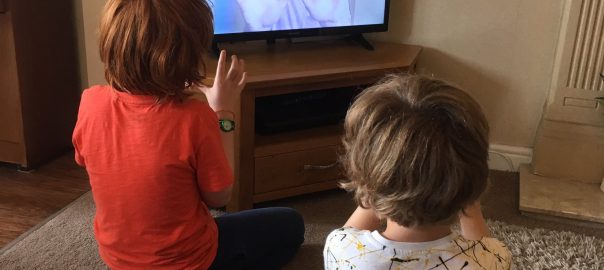
Some of the research around early talk is quite shocking.  Studies suggest that some parents talk to their children for between 7 and 44 minutes per day.  Perhaps this is understandable when you consider the amount of time some children spend at school or at home, away from their parents.    Talking to a school age child for less than three quarters of an hour might be explainable but what about a pre-school child?  Further research which shows almost 25% of pre-school children own a tablet or electronic device for the purpose of entertainment.  As a parent myself, I appreciate that a screen can be respite but anecdotal evidence suggests that some children speak with American accents as the videos they watch online are the most prevalent voices in their lives.  Then there is the quality of the conversation which children are engaged with; the children who shout in their early years setting may do so because that is how they are heard at home.

John Kirk – Storyteller

Engaging in talk provides children with many of the necessary skills for story; hearing and using different sentence structures teaches a child about form, listening to others and taking turns to speak teaches about positive participation, builds concentration, develops empathy and curiosity whilst also teaching about speaking for a purpose.  Only once a child has begun to master talk can they begin to use story to explain their world in much the same way as their ancient ancestors.

To encourage talk in a learning setting we must consider the resources that we make available to children.  How will they stimulate talk?  What will be the quality of the talk?  Resources that stimulate talk are manifold but more familiar resources are likely to be more effective stimuli (a child may talk about a soft toy but struggle to talk about an aeroplane if they have never travelled).  Giving children new experiences will not only create opportunities for talk but will also become reference points for imaginative play and possible future storytelling.

Using open questions practitioners can lead talk and elicit story:

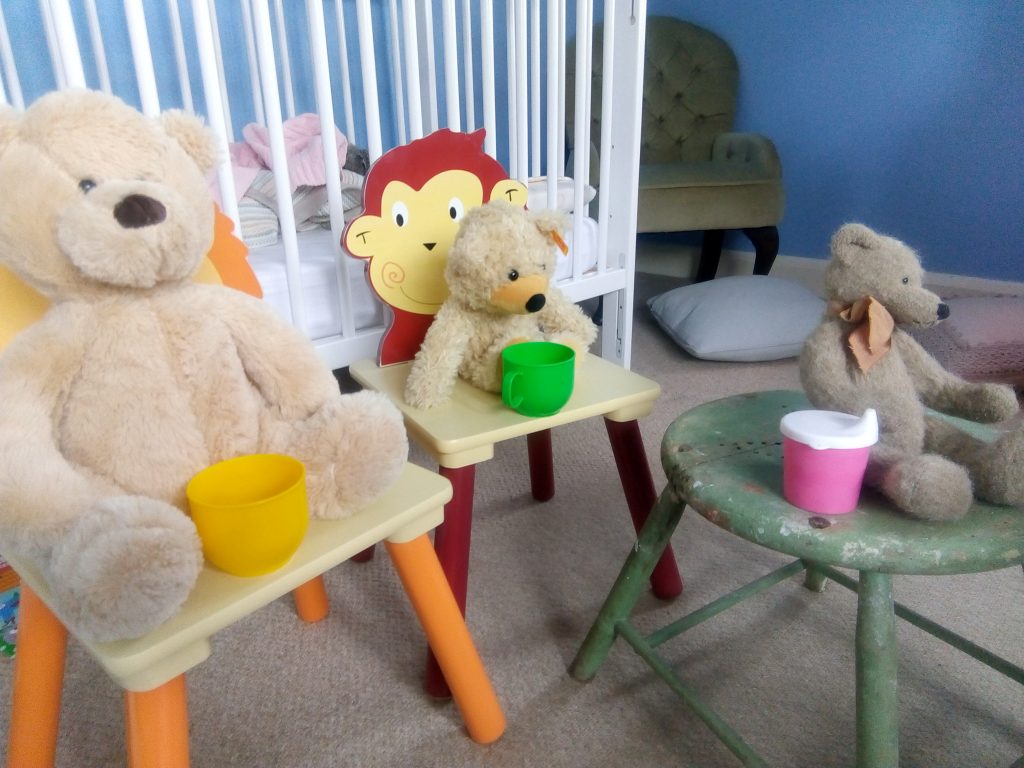
What is teddy’s name?  Where are teddy’s friends?  Why is teddy sad? 

Adults can go further, intervening in play to build imaginative games with talk; if a child is playing in a mud kitchen, how might talk about the Three Bears porridge affect the play and the talk within the interaction?  Such impromptu interventions can be planned into the way a setting is prepared for a session and also challenged; instead of a soft toy bear could a child be encouraged to share a story about a bear?

The beauty of talk is that it can occur throughout a practitioner’s setting and interactions with children but it will not come unless the practitioner uses their skills and sensitivity.  Unlike story, where a practitioner may feel embarrassed or overwhelmed, talk is natural.  Talk will come within trusting caring relationships, where children are co-creators because their contributions are listened to and valued.  Families also need to be handled skilfully and sensitively.  It is never too late for families to change habits and talk more at home because once there is talk, there will be stories.

John Kirk is a storyteller, Primary School teacher and poet based in East Sussex

What a crisis at the BBC has to do with storytellers

It has been my recent pleasure to have a go at radio football commentary.  As a life-long fan of the beautiful game, this is bucket list stuff but it has also been thought provoking.  Reflecting on my commentaries, I wonder whether I have commentated on the game or a team and whether I have managed to remain neutral during the match.  Whilst I would like to say I have been fair, I am pretty sure I have made more than the odd comment which might suggest biased to the home team.  Maintaining a non-partisan position is an extremely difficult ambition particularly if you are passionate about the subject or event.  Human beings can display subconscious biased in their words and actions but can I be blamed if I get excited during my commentary when my team is up?  I’m pretty sure that taking a totally dispassionate position wouldn’t be much fun for me or the listeners.

As a student, I heard the phrase “History is written by the victors” used to describe how the widely accepted view how the world is chronicled.  This “Great Man” History as I have heard it termed, has been fed by creatives who played their part in colouring how we remember people and events.  The Bayeux Tapestry makes a famous impression of Harold’s death at the Battle of Hastings and William Shakespeare’s descriptions of Henry V and Richard III are entwined with accepted fact.  Conversely, for many, the First World War is summed up in the poetry of Siegfried Sassoon and Wilfred Owen.  As powerful and compelling as they maybe, these are viewpoints of people and events which must be considered through a wider lens if we are to find the truth of the story.

Stories have been shared for centuries with their content changing according to the purpose of the storyteller.  Within a moment of storytelling, the storyteller controls the narrative and once a willing audience is found, stories can take root.  In the modern world, all kinds of stories are told; stories about climate, migration and money told in powerful compelling ways.  These stories reach us day and night through a range of media; it’s easy to feel overwhelmed.  To protect ourselves, we learn to be suspicious of a story’s purpose, becoming aware of agendas and searching trusted sources.

For years, BBC News has been seen as a trusted source; an impartial institution in an ocean of dubious stories.  With its unique funding structure, which meant it didn’t have to bow to the demands of sponsorship and endorsements, it has sought to play Switzerland in the mire of misinformation.  Unfortunately, it seems that in reediting a significant story about American politics, trust in the BBC News’ impartiality has been severely affected and the damage done may take some repairing.  There are obviously other factors to what is a more complex news story but for an organisation to fall low because of a story’s presentation is a seismic moment for the importance of integrity in storytelling.

Fortunately, unlike the BBC, storytellers are not bound to be impartial.  We have thoughts, feelings and opinions and sharing those things is what makes a story worth hearing as they can appear to an audience as enthusiasm.  We grow up knowing that good stories can be trusted but in an increasingly saturated landscape the storyteller must work hard for their content to cut through – very few storytellers have the reputation or platform of an international organisation like the BBC but we are still advocates for our stories.  In a world of noise, storytellers are often in the privileged position of having the listener’s undivided attention; this and our story’s purpose should always be considered and respected (on and off the pitch).

John Kirk is a storyteller, Primary School Teacher and poet based in East Sussex.

Click here to browse John Kirk’s contributions to BBC Radio.

An incredible 47 out of 110 children finished the Summer Reading Challenge! This is how a small Primary School did it and what its impact was on reading attainment…

The Reading Agency’s annual six book challenge returned during the summer holidays. Over the years, I have been privy to many discussions of the scheme, its challenges and benefits, but as a newly qualified teacher I wondered whether I could qualify its impact on children. 

Between September 2024 and July 2025, I was a Year 5/6 teacher at Dallington Primary School, near Heathfield in East Sussex. Dallington is a very small, caring school with just 110 pupils which serves surrounding rural farming villages. Like many of the local schools, it is predominantly white with a range of abilities and learning needs. The senior leadership are amazing and their willingness to support new ideas would be pivotal to encouraging children to read more.

The following is a record of what I did to encourage children to read. Many of the initiatives I’ll mention were explored with a class of 35 children but, gratefully, were supported by the whole staff team.

Reading is a life skill which requires effort to master. Sadly, there is a continuing social stigma that readers aren’t cool and the rewards for reading aren’t always as obvious as the trophies you might receive for sporting achievements. As a result, many children don’t/won’t practice reading. To begin to change attitudes and get children reading for pleasure, the skill of reading would have to be the golden thread through the year both in and out of class.

We began on day one.  I chose class reading books that we might be able to finish in preference to titles that would be abandoned as the learning topic changed. As a result, Malorie Blackman’s “Cloud Busting”, Phillip Pullman’s “Clockwork”, JRR Tolkien’s “Letters from Father Christmas” and Michael Morpurgo’s “Beowulf” were shared and supplemented in discrete reading lessons with extracts from texts including “Goosebumps” and “Fortunately, the Milk” as I sought to present a breadth of styles and genres that might appeal to the class.  Display boards were used to celebrate responses to reading Roald Dahl and T.S. Eliot. As well as reading as a class, independent reading became an expectation at the start of the day and during transition. To this end, we spoke to the children, ensuring their tastes were reflected on the bookshelves and I tried to recommend books based on my own reading experiences.

Midway through the year, I challenged the children to recommend a book to me. At Christmas, I had initiated a book gifting project during which the class wrapped and hid bundles of books for the community but by setting a series of book review homework tasks requiring a thorough response to reading a book beyond the usual “supermarket titles” (so not Jeff Kinney, Liz Pichon, RD or DW) I challenged the children to find new favourites themselves.  These reviews were shared on World Book Day with the school community before being collated and handed on at the end of the year to the 25-26 class in a book. I was pleased with the variety of titles that were read and the positive feedback from parents about the project. 

At lunchtimes, as I worked in the classroom, I made East Sussex Children’s Book Award titles available to avid readers and the school arranged for children to attend related author events. In hindsight, perhaps a more formal reading group with more time for book talk might have been better than an informal lunchtime library as attendance was unpredictable.  Also, at lunchtime, children would take it in turns to visit the Reception Class to read stories with them. This was particularly popular as the younger children always wanted to play afterwards.

Inevitably, SATs began to dominate our schedule (all the children did extremely well at reading inference when tested) but as soon as the tests were done, I prioritised reading for pleasure. In the final weeks of term, we read 200 pages of Emma Carroll’s “Letters from the Lighthouse” and the class made artworks based on the story to be displayed in the newly refurbished school library.

By the summer, I felt I had the confidence of the children, the school and the parents ready to attempt the Summer Reading Challenge.

The Summer Reading Challenge, produced by The Reading Agency and delivered in partnership with libraries, is a national reading for pleasure programme.  Every year East Sussex library and information service encourage all primary aged children to register to take part with their libraries.  The challenge is promoted directly to all primary schools and academies in East Sussex, with every primary aged child receiving an invitation to take part, and schools informed of the theme and other key information.  The library service has a countywide advertising campaign to promote the challenge to the wider public.  There is also a preschool challenge for 0 to 3 year olds to join.  All East Sussex libraries have a programme of free holiday events linked to the theme of the challenge to encourage families to visit libraries in the summer.

A week before the summer holiday, I hosted a full school assembly in which I shared stories with the children and, with Year 6’s help, I collated book recommendations based on a whole school audit of the children’s favourite stories. As well as personalising reading for the children by recommending books, I was given permission to incentivise the children: we offered playtime in exchange for reading! Children reading a book would be gifted 10 minutes of extra playtime. Completing the SRC would therefore give you a full hour of free time!

Recognising that a major difficulty of completing the reading challenge is that it’s really hard for some children to read six 250 page plus novels in a summer, as a school, we agreed to extend the deadline for reading to the 10th October; this would coincide with The Literacy Trust Take 10 for Reading initiative – the hope being that by October most children would be able to share their reading success with a prolonged playtime. 

In the final days before the holidays, I liaised with East Sussex’s Heathfield Library and made myself available to families at the library in order to help sign children up for the reading challenge; the library working with the school and families to encourage reading for pleasure. In a 45 minute period (time I would have spent at school anyway), I was at the library to greet children and recommend books.

This may seem like a lot of work and perhaps it is but by linking reading to the taught curriculum, it never felt that way. The children saw that I was an enthusiastic reader, the school and I repeated messages about the importance of reading as a life skill and a tool for well-being and then with the library service we created opportunities to celebrate reading for pleasure.  By taking responsibility for the children’s participation in a scheme traditionally associated with libraries, the school made a statement about the importance of reading for pleasure and bolstered the significance of the challenge as a transition activity into the next academic year.

In October 2025, Dallington’s Headteacher, Paul Cox shared the following update:

“The reading challenge has been a huge success this year. Normally, we average between 8 and 12 participants. This year we had 49 start and 40 complete the ‘official challenge’ with your idea of extending the challenging, we had another 7 children bringing our total at 47 children- which is just under ½ of the school!  The baseline data has been collected – we have seen some massive jumps in the reading fluency scores”.

This was an extremely small case study and it would be wrong to assume that it shows children participating in the Summer Reading Challenge are better readers than others; it doesn’t. It is exciting to hear that Dallington noticed a positive shift in their reading fluency data so soon after so many students completed the Reading Challenge. I hope that some of the ideas we introduced in my year with the school will become part of their continuing culture and that what may have been a coincidence happens again. What I am certain of is that whilst there may be obstacles to schools and families engaging meaningfully with the Summer Reading Challenge, by supporting libraries, communities can get children reading.

John Kirk is a Primary School teacher, storyteller and reading champion based in Lewes, East Sussex. To find out more about John, visit his website. Thanks to Paul Cox, the staff and pupils at Dallington Primary School and Claire Morley at East Sussex Library and Information Service for their help preparing this piece.
Do you speak story?

Whilst storytelling remains one of the most accessible of ancient art forms it can be understandably abstract for a young person with limited experiences. If imagination is the practical application of learning, then many young audiences will rely on more concrete resources to aid their understanding (you might struggle to imagine a Fox if you didn’t know what one looked like). Pictures, props and costumes not only enhance but support an audience’s understanding of story. Suppose then, that that story is being told in another language. You may have the experience to build an image but not the comprehension to link the experience to the story (you may not understand that a fox is called a fox). This is the challenge facing audiences when I tour my stories overseas and to some extent in the UK.

I am asked about why I choose to tell familiar stories. My consideration when selecting stories to tell where English is a Foreign Language (EAL) is based upon popularity and reducing the cognitive load for the audience.  The right story will suit my purpose both as an entertainer and an educator. When I work abroad, I tell The Gingerbread Man more times than I eat. It is regular for children to shout “I know this story!”. Apart from enjoying my interpretation, knowing the plot allows the audience to focus on my language and vocabulary choices.

In stories like The Three Billy Goats Gruff, I connect repetitive language to easy to remember actions (telling The Enormous Turnip I use repeated rhyme). Quickly, the children begin to copy my actions and accompanying phrases and build confidence in listening and speaking English within an audience setting. Additionally, when working with Dream On Productions, I offer “brain break” activities based on simple songs and rhymes.  In these more relaxed moments, the children practice language through silly fun.

The impact of hearing words and phrases repeated in familiar context is that some of that language begins to be assimilated and used; repetition rewarded with remembering and independent application. Research suggests that remembering a single word can take between 6 and 20 repetitions so an interactive story can be a fabulous vehicle for aural word recognition and language comprehension that can be as intensive as required. A teacher in Brasilia told me that her 11 year old daughter (an EAL speaker) had recounted my stories to her family after attending one of my sessions. I am constantly impressed by anybody who is bilingual but this is a wonderful demonstration of a young student understanding, enjoying and sharing my stories.

My own linguistic skill can be summed up like this:

Je ne parle pas français

No hablo español

Non capisco l’italiano

Não falo português

I speak story 

I guess this is a rap from Rio

For three weeks this September and October, it has been my privilege to tour some of the international schools of Brazil, visiting the cities of Sao Paulo, Recife, Brasilia and Rio de Janeiro, and falling in love with an eclectic nation and its wonderfully generous and hospitable people.

As with my previous trips to the Iberian Peninsula and Central Europe, the arrangements were made by Dream On Productions. To find out more about their work with students around the world learning English through storytelling visit their website.

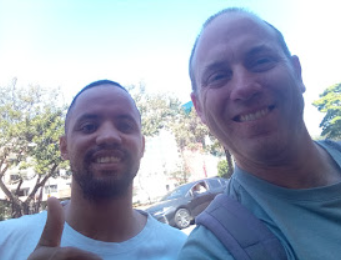
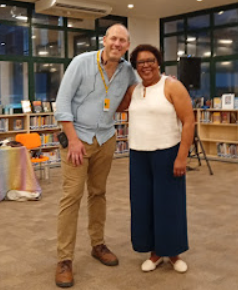
In the meantime, here is a rap I devised for a Grade 9 group studying Angie Thomas’ “On the Come Up” but first, the faces of some of the people who made my time in South America so memorable.

Ciao for now Brazil!

My name’s John and I’m a storyteller;

if you want a tale, I guess I’m your fella.

For 3 weeks now, I been touring

Brazilian schools, no life ain’t boring.

I’ll be honest, I’ve not worked harder 

but I’ve seen Sugar Loaf and tasted feijoada.

Although I speak no Portuguese

I’ve been pleased

how I been received;

kids who don’t understand

still jump and enjoy “The Gingerbread Man.”

Its been great but I’ve been alone

and now I’m ready to head for home.

To see my daughter;

show her what I bought her.

That and the fact

when I get back

I’ll be two weeks away

from my wedding day.

Brazil will be a chapter of my life

I’m hoping to write more with my wife

full of fun and loads of laughter

so we can say

“They lived happily ever after”.

A life, carried in a suitcase: Using props and artefacts to elevate the telling of stories and teaching of history.

On Saturday 10th May 2025, myself and fellow storyteller Andy Copps, were invited by Hammersmith and Fulham Libraries and Archive Services, to be a part of the borough’s VE Day 80 celebrations.  This was a large public event in Ravenscourt Park featuring live music, food vendors and military artefacts of different shapes and sizes ranging from armoured vehicles to shrapnel.  Foot fall for the occasion was anticipated to be between five and ten thousand people.

There are many challenges to overcome when storytelling at festival-like events.  During a show, ambient noise can be distracting for both the storyteller and the audience but, in an environment of overwhelming choice, an audience cannot be guaranteed.  For this event, we were fortunate enough to have a shady storytelling area away from the main showground and as many as 180 people attended three sessions exploring the remarkable story of World War Two hero, Job Maseko.  We were extremely pleased with these figures which were achieved in part through further interactions with the public between these showings using suitcases.

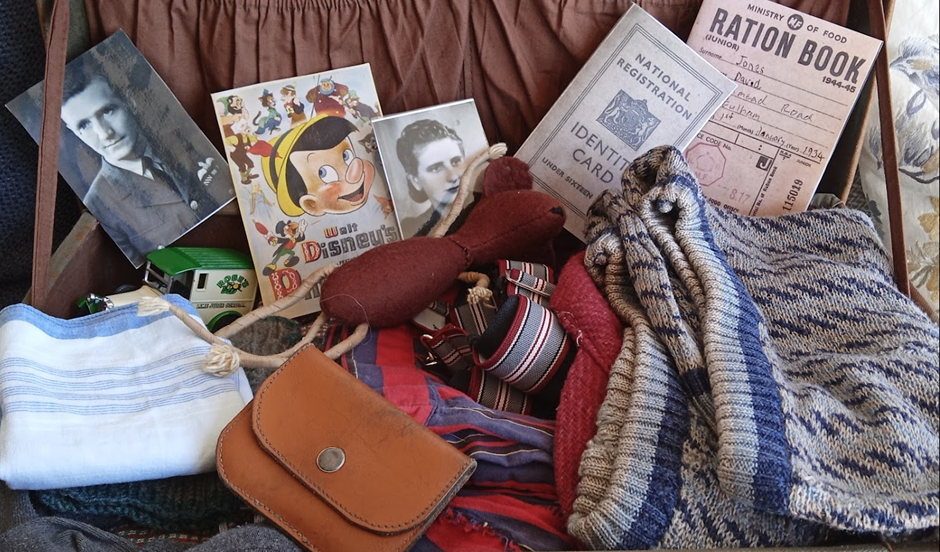
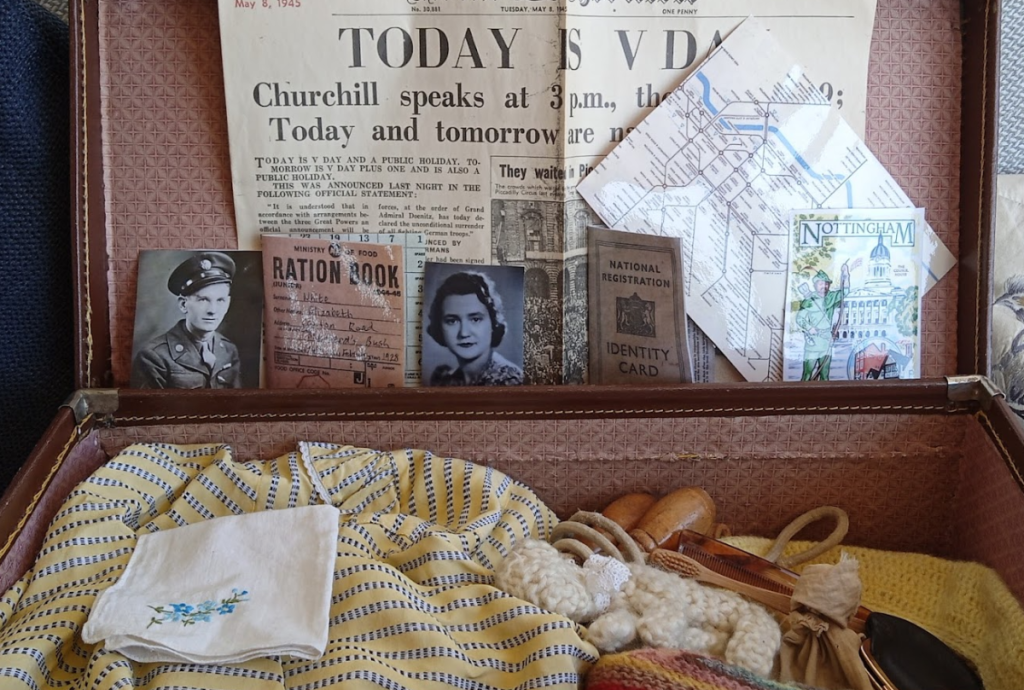
After an initial meeting with LBHF, it was decided that Andy and I would wander the showground, sharing the stories of evacuees.  With the help of the Archives, we found the stories of several evacuees but to elevate their experiences I asked Gladrags in Brighton for help.  Gladrags is an incredible community initiative, offering affordable costume to community groups in and around Brighton.  They were able to supply us with two suitcases; one for a boy and one for a girl.  We then supplemented these props and costumes with items that would help tell the evacuee stories including identity cards and ration books, photographs, maps and pictures.  These added authenticity to our delivery and helped bring the stories of eighty years ago to life.

We decided that rather than simply present the suitcase and its content, we would encourage the audience to discover the evacuee stories through interacting with the objects.  This is not an entirely new approach for me; whilst working with Hackney Museum (2012) and the Vestry House Museum (2018) I was part of a team that put together workshops which included artefacts for school children.

Apart from being good fun, educational theory supports using story and props to expose learning; Daniel Willingham talks about the human brain being attuned to listening to stories and Barak Rosenshine suggests that using concrete resources to scaffold learning makes experiences more memorable.

We created a scenario; the storyteller found a nameless suitcase and the audience is enlisted to return it to its rightful owner.  Once the suitcase was opened, the audience was able to take things out and consider why they were in the case.  For some it was instinctive and they quickly deduced the case’s owner using the presented evidence.  For younger children, or those with less experience of World War Two, it was a more difficult process but careful probing questions helped guide more hesitant audience members to the story hidden in the suitcase:

Does this case belong to a boy or a girl?

How old do you think the owner of the case might be?

What is their address?  Why might their address change?

Who is in the picture?  Why do you think that?

By asking questions that required narrative answers, the audience were empowered to tell the stories.  In some instances, we co-constructed the story before we disclosed the owner’s story (a couple of children seemed to think the bag belonged to Queen Elizabeth or Anne Frank!) using the objects to illuminate stages of the story – when explaining that a child slept in a tube station I had a tube map, when talking about their time in Nottingham I referred to a date postcard.

The suitcase storytelling was well received by the audiences.  These were only the briefest of interactions but they allowed families to have intimate hands-on experiences of history.  Andy and I estimate that over the course of the event we facilitated over forty sessions and at the end of each we were able to leave interested families a QR Code link for our static storytelling events.  Many of the children who joined us for the story of Job Maseko, we had engaged with one or both of our suitcase tales.

Reflecting on the day, I am sure that the contents of the suitcases elevated our delivery and signposted other further storytelling work.  If we were to repeat the event, the suitcases would definitely feature as both a device for storytelling and marketing.  I also feel that would be a great project to take into schools and museums.  Through skilfully using the resources of companies like Gladrags, children get hands-on with history and learning is remembered forever.