 Danielle Gibbons, Libby Stout, Corina Schroder, Ellie Stewart, Gemma Bonner, Lucy Bronze, Rebecca Easton, Nina Pedersen, Martha Harris, Amanda Da Costa, Fara Williams, Katrin Omarsdottir, Louise Fors, Nicole Rolser, Katie Zelem, Gemma Davison, Lucy Staniforth, Natasha Dowie and Kate Longhurst.
You might well ask who these people are. This is the Liverpool Ladies football team who won the 2014 WSL championship. A tremendous achievement of which they should all be rightly proud but I doubt many people will be naming their children after any of them just yet. In my lifetime it would be fair to say that women’s football has always been overshadowed by the men’s game. Gender stereotypes and ignorance may also be at least in part to blame.
Why am I telling you this? Well as I present “The War Game” I have been thinking a lot about gender and how audiences respond to my stories. In “The War Game” I have opted to finish with a moment’s silence to commemorate those who have lost their lives in war. This is signalled by a whistle and ended with three sharp whistles (like you’d hear at the end of a football match). On one occasion the silence was broken when a female member of staff quite reasonably encouraged the audience to clap. I (foolishly) suggested that perhaps girls don’t understand football. Then, in a question and answer session, when a young man asked why women didn’t fight The Great War. Rather than tell the young man all the positive things that women did do during the war I simply told him they weren’t allowed to by the British Army. Twice I staggered over stereotypes and did nothing to dispel them. Hopefully I can redress this in the remainder of this blog.
 Women are an important part of my life. Without the love and support of my mother and my wife I genuinely hate to think where I’d be. I’d also be nowhere without the many significant women in my work. In a recent blog I discussed the attributes of heroes, focussing on Odysseus and Beowulf but in that blog I also talked about Scheherazade who in “1001 Nights” used all her courage and wit to change the heart of Shahryar and in doing so saved the lives of the women of her land. Heroines do not always trip off the tongue in the way heroes do. Perhaps this is because in many stories women act quietly support their men who then take the glory (in “Dracula” Mina Harker is as at least as important in the hunt for the vampire as any of the male characters but doesn’t necessarily get the credit). In the past I have spoken of my admiration for Odysseus’ wife Penelope who waits for her husband to return from Troy for twenty years. Whilst Odysseus the man could be said to act impulsively, Penelope the woman is steadfast in her loyalty.
It isn’t just in stories that women quietly demonstrate heroism. Whilst working with Hackney and Waltham Forest museums I learned about the role of women during The Great War. The war wasn’t easy for anyone and the men who fought were husbands, brothers, fathers to the women they left behind. Still it was those women who kept Britain going during the war, some of whom contributed directly to the war effort in transport and munitions factories (girls who worked in munitions were known as canaries because the chemicals turned their hair and skin canary yellow!). This greater responsibility empowered the Suffragette movement and led to further emancipation.
Now ahead of launching “The War Game”, I wasn’t sure that girls would like the story. That a story which revolves around a football match wouldn’t capture their imaginations. Sure enough as I tell the story I see hard-to-reach little boy’s eyes light up at the mention of football because football is their thing. Do the girls switch off? Well of course not – it was silly of me to think they ever would – they stick with the story to the end. To understand why allow me to share a generalisation from the question and answer sessions that follow each presentation.
Me: What is the story about?
Boy’s answer: Football
Girl’s answer: Friendship
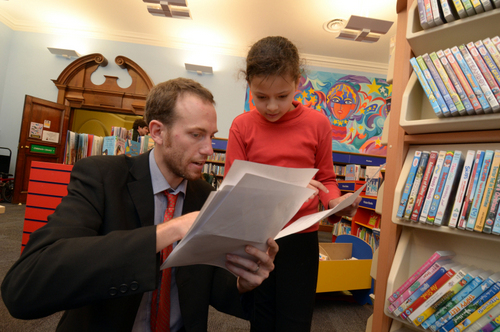 The point of telling “The War Game” is to commemorate an event of global significance and make it more accessible to young audiences but in doing so it is interesting to see how we relate to stories. The above example is of course a gross and controversial generalisation as many girls also say football but then I could just as easily have written a blog considering why boys like fairy tales. The fact is that many of the stories I tell could be construed as being for boys or for girls but whether they be about footballers or princesses, a story’s themes are what will appeal to us and make them winners.
It is wrong to assume things on the basis of gender. Liverpool ladies, Scheherazade, Penelope and the women of Britain who contributed so stoically to the war effort are all great examples of how many stereotypes about girls are misplaced. As for stories, we could talk further about gender differences or we could just accept that part of the joy of stories is subjectivity and where one person is enthralled by the football match another understands the humanity in a simple act. Today, I’m happy to put the lid back on a can of worms and leave it at that.
PS (31/12/14) follow this link to a TED talk about how gender roles are portrayed in film. https://t.co/DyffkJzrXQ


