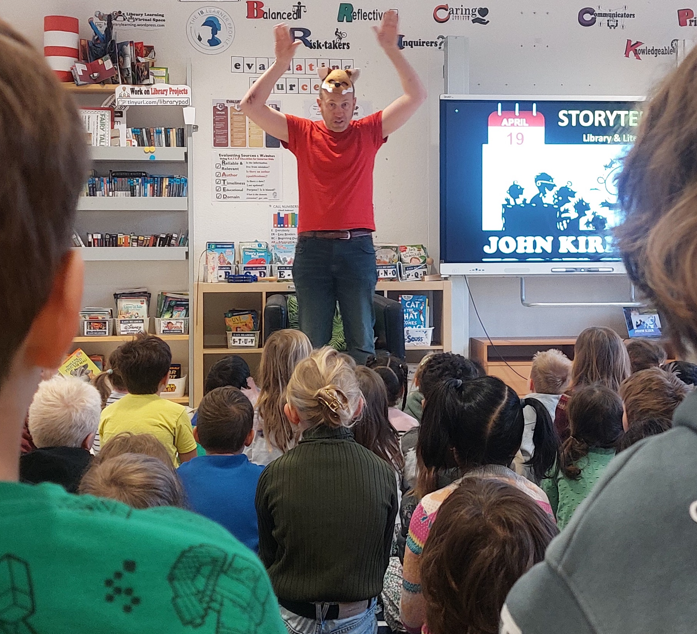
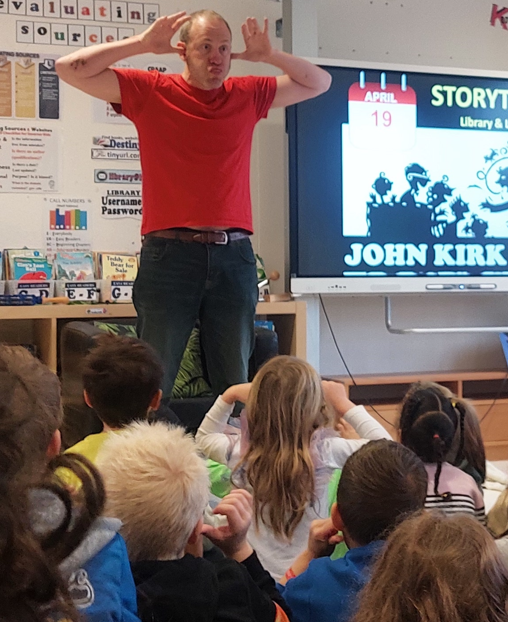
On the 10th April 2025, I was invited to speak at the Bethel Convention Centre in Sandwell as part of the authority’s Early Years Conference. Attending were representatives from lots of different agencies working in the area including schools, nurseries, The Book Trust and National Literacy Trust.
What follows is a summary of my presentation. It was not my intention to teach storytelling but instead to reflect upon its importance within early years settings. Like any further professional development, I hope that the reader finds my thoughts to be a refreshing perspective on how, through storytelling, practitioners can create a foundation for early reading and writing.
The ability to share stories is uniquely human; whether it’s at the dinner table or in the supermarket, story is a part of life and stories are shared for a multitude of reasons.
When you read a story aloud, the narrative is guided by the author’s words (however old they maybe). Storytellers don’t rely on books as prompts; their stories have been passed through oral traditions and stories can be manipulated according to their purpose and audience.
As Early Years practitioners, our audience are the children in our care but our purpose is manifold; social and emotional development, speaking and listening skills, early reading goals or simply sharing stories for pleasure, storytellers would argue that there are a wide range of soft outcomes to storytelling.
Whilst there are similarities between reading and sharing a story with a child, the most obvious difference is that a picture book is a concrete, visual resource. Where the printed page supports word recognition and imagination, it is down to the storyteller’s skill to create pictures using words. Using language for description and exposition might enhance language comprehension in ways books can’t but can the abstract nature of storytelling be a barrier for younger children?
To tell a story without any form of visual aid challenges the audience to use imagination. Imagination is the application of past learning. We can imagine because we use our previous knowledge to create new images. For example, if I am to imagine a horse I must have experienced a horse or the language that describes a horse (a larger mammal which walks on four legs with a mane and a tail). Without the appropriate learning, imagination is likely to be an effort for an early learner.
Workshops and activities
Effective storytelling in early year’s settings means helping the audience to imagine by scaffolding stories using suitable prompts. As well as books, prompts for storytelling might include pictures, objects and environments. A carefully chosen picture of something familiar (a market or a birthday party) can act as a prompt for story. By using gentle probing questions, an early year’s practitioner might encourage their children to tell stories based on their own experiences. By offering objects for exploration or discussion, practitioners help children construct stories using their knowledge (factuality is another conversation). When planning the children’s environment, our choices can lead to imaginative play and storytelling. Music, puppets, art, celebrations, events and festivals can also be great prompts for children to share stories.
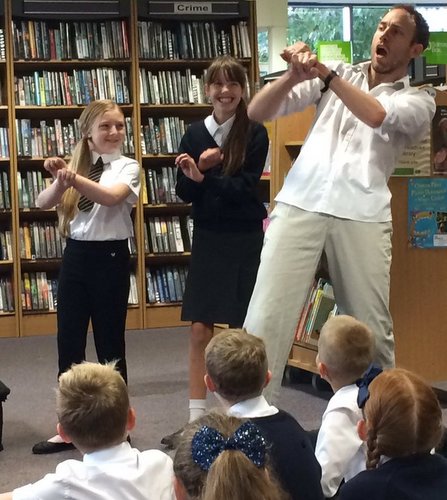
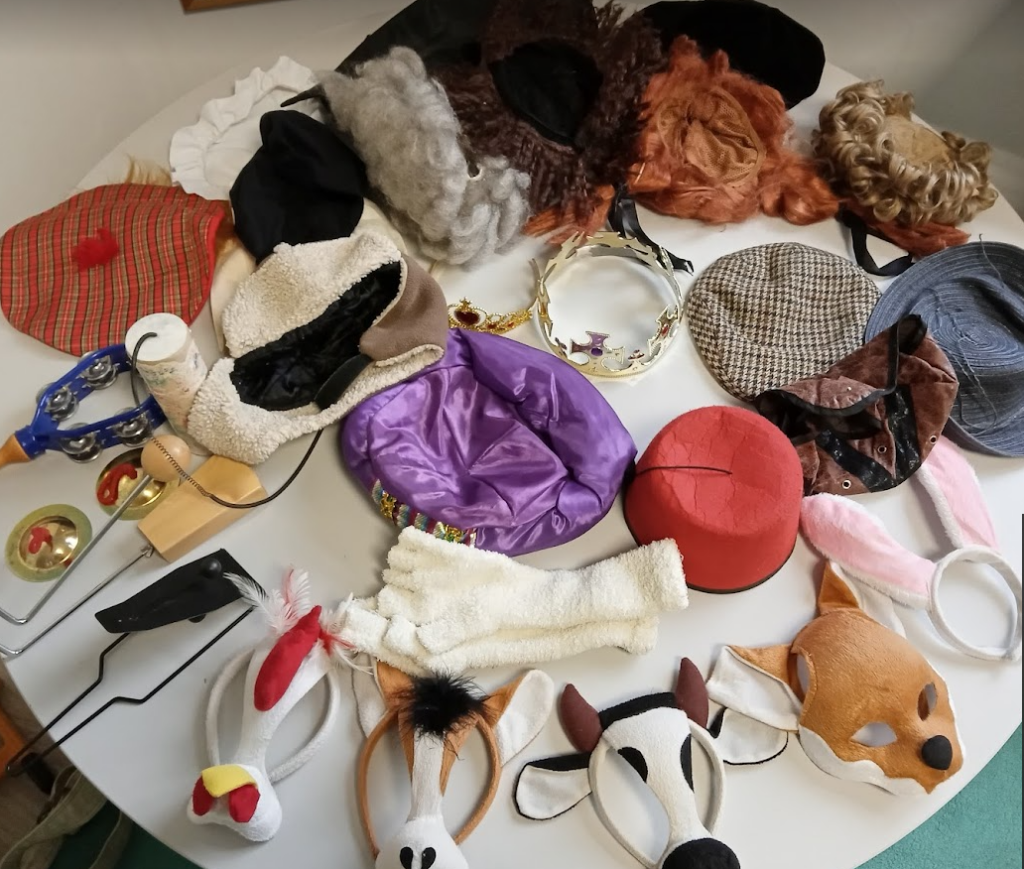
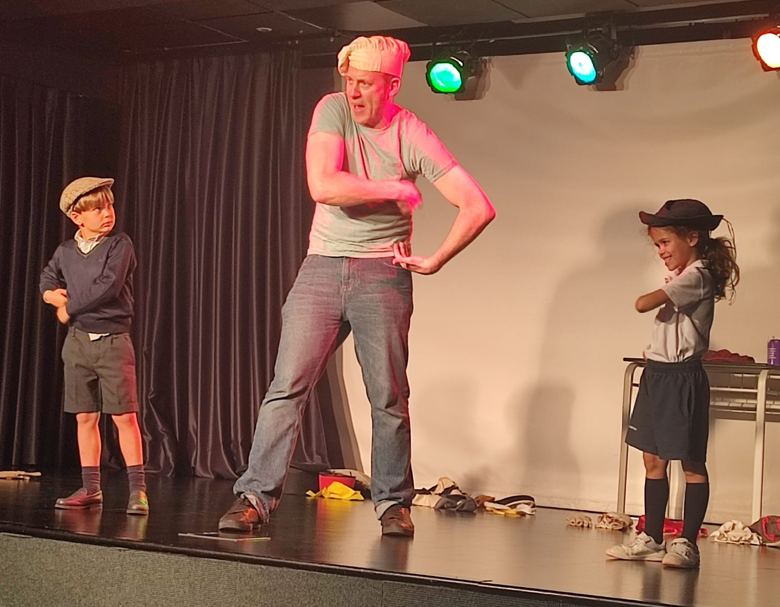
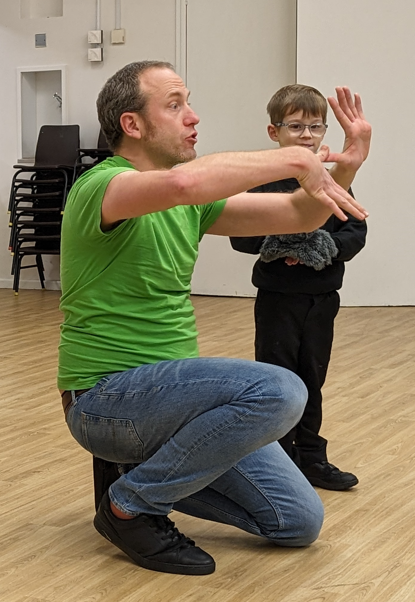
None of these ideas require a practitioner to be a performer. I have found that performance storytelling using colourful props can be a fantastic vehicle for the precision teaching of language both in the UK and overseas but practitioners need to feel comfortable if technique is to become habit. I have a memorable style of demonstrative, dynamic storytelling but every storyteller is different. By modelling the sharing of stories and making effective use of opportunities to talk and play, our children will be empowered to use their imaginations, to narrate their world and rehearse their stories every day.
John Kirk – Storyteller
The most important prompt for any story must be the storyteller and the audience. The skills you will practice and the stories you will tell in your settings will have a huge impact on your children but for children to enjoy stories so must you.
This summer I am excited to be working with Wowo Campsite near Sheffield Park in East Sussex.
Close to the lush green farmland and woodland of the Ouse Valley, Wowo is a special place for families and a great place to tell stories. Despite living twenty minutes from the campsite, I hadn’t been to Wowo before doing a set there during May Half term. Walking onto the car free site I was struck by the smell of wood fired pizza and campfire smoke, the murmur of campers chatting and shrieks from young cyclists and footballers. On a sunny evening, it really is idyllic.
The venue is a marquee at the heart of the site where the temporary auditorium of wooden benches and picnic tables gives a rough, rustic authenticity to the session. In May, within a 75 minute set, all kinds of families enjoyed the silly stories and traditional folktales I toured to Europe in March as well as and a story devised on the night with the Wowo audience. It really was joyful, collaborative fun. I can’t wait to see how the stories are received through the summer.
Upcoming Wowo dates are as follows:
Monday 29th July 2024 (6.30pm-8pm)
Monday 12th August 2024 (6.30pm-8pm)
Wednesday 28th August 2024 (6.30pm-8pm)
I am also helping the site host a Poetry writing competition. For more details of this, the storytelling events and camping, visit Wowo’s website.
This summer, I’ll also be doing storytelling events for Surrey, East Sussex and Hammersmith and Fulham Libraries. It would be great to see you there!
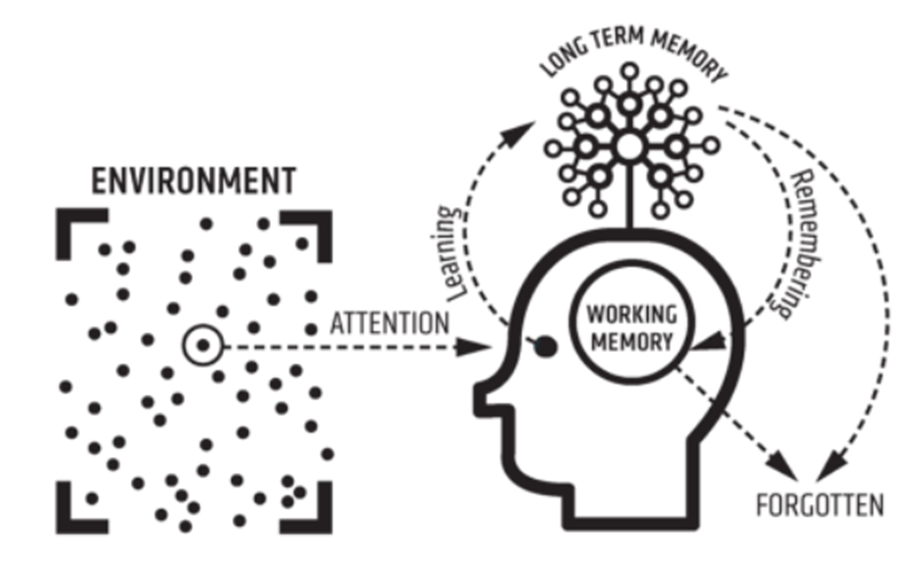
Think back to your experience of school. What are your fondest memories? Perhaps you remember doing something with a friend, a teacher or an assembly but are your memories directly linked to learning? I can use long multiplication but I don’t remember learning it. This is probably because of the way human beings learn things.
This model shows how human beings learn (Tom Sherrington, 2020); information from the environment transitions to the working memory and then it passes to the long term memory to be later retrieved or is forgotten. The most likely reason why I can’t remember learning long multiplication is that I gradually built this schema through repetition and practice. The other things I suggested (a friend, a teacher or assembly) might in fact be homogenised memories or stand out because they were completely extraordinary. Cognitive psychologist Daniel Willingham suggests that whilst human beings can reason we don’t enjoy it and prefer to rely on memory (2009). Willingham calls learning the “residue of thought” saying that thinking occurs when information is presented in new ways.
Before there were books and other media, storytellers helped our ancient ancestors to explain their world. A well told story will be remembered and popular tales would be retold for the purpose of entertainment and education. Over time, as our understanding has developed, story has taken on a different significance in classrooms with many teachers understanding the power of story as a vehicle for curriculum learning.
One of my favourite quotes about authorship is credited to JK Rowling; “You can’t be a good writer without being a devoted reader.” How can we expect learners to have enriched vocabulary, recognise grapheme-phoneme correspondences or different forms of writing if they have never experienced these things themselves? Guided reading and writing inspired by a carefully selected story or reading a story for pleasure as a class can deepen a learner’s understanding of language and its use.
Pie Corbett’s popular Talk for Writing programme goes even further, encouraging learners to imitate model texts using text maps (pictorial diagrams of the writing) before the teacher leads an innovation and independent writing phase. The memorisation of text maps can promote oracy skills as learners will often rehearse a story aloud with accompanying actions to strengthen their memory of it.
Presenting information through story to emphasis the causality of events (Willingham’s 4cs of story, 2009) can enhance a learner’s understanding of History and Geography even if the main characters aren’t always people; a chronological story can help to explain why the Romans left Britain or the factors that lead to the destruction of Pompeii by Mount Vesuvius. In the story of the Pitcher and the Crow, stones displace the water for the Crow to then drink, a Science experiment that might be repeated with a class as they explore states of matter. Religious parables, fables and folklore, myths and legends can all be incorporated by a teacher into RSHE, PSHE, MFL and History in an impactful way.
Most teachers I know, even those who do not explicitly use stories in their teaching, understand how to communicate a narrative when reading from a book. So what is the role of the professional storyteller? Storyteller Andy Copps and I have been working on a joint project exploring the folklore of southern Africa. In a 45 minute storytelling, we offer ancient answers to questions such as why the Giraffe has a long neck, why Lions don’t eat fruit and why Rhinos have short tails. As well as exposing children to rich vocabulary through oral storytelling, the stories show how the ancestors of southern African tribespeople explained their world and can be a stimulus of discussion in PSHE and Science (how animals and plants adapt to their habitats) as well as a starting point for story writing. We have identified these possible learning outcomes from our presentation but they are not concrete and a teacher might find other curriculum outcomes relating to a storytelling session.
Educationalists like Tom Sherrington and Daniel Willingham might frown at the idea of different learning styles but storytelling can be a highly interactive, fun way for children to engage with new information. Think back to Sherrington’s model at the beginning of this blog. When the information you want a learner to take on board is competing with lots of other stimuli, making a topic easier to process by addressing it through a story is an approach that may work for some learners. Certainly, including a professional storyteller in curriculum planning could be an extraordinary moment in a child’s school life which makes subject learning more memorable.
During my time with Dream On Productions I was asked to present a workshop in storytelling technique Germany. As a trained actor, I have always felt comfortable teaching young people stagecraft but this felt slightly different. Could I make the art of storytelling accessible, relevant and fun?
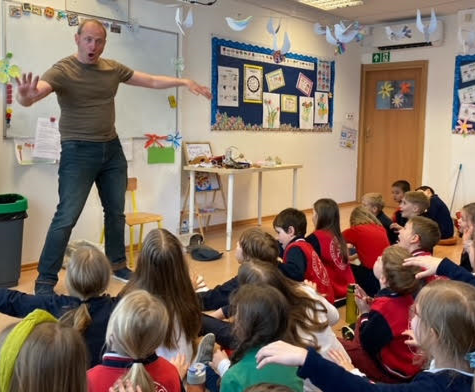
We started with Chinese Whispers as we discussed the difference between an author and an oral storyteller (there were some interesting comments here about AI – does an author have to be human anymore?). Analysing our game helped us identify how and why stories change according to a storyteller’s purpose. With some volunteers, I challenged the group to think of appropriate adjectives to describe characters; what is the difference between describing a King as greedy and overweight? Do both descriptions support the audience’s understanding of a story. The whole group then used soundscapes to describe a setting and I showed the children the instruments I use to help me create tension. Through three games I was able to introduce the power and importance of a storyteller’s choice of language in a very impactful way.
My information sharing went into the story. For the workshop I chose the well known tale As Much as Salt being sure to stop and start the story in order to highlight how, without using visual stimuli, descriptive language (fronted adverbials and expanded noun phrases) we could consolidate setting and character for an audience. As I deconstructed the story, I also impressed the notion of the Power of Three and how the storyteller uses the concept to develop and resolve plot (the third Billy Goat pushes the troll from the bridge, the third Pig’s house is made of bricks, the third daughter loved her father as much as salt).
My visit to Heidelberg was very successful. Yes, I had told classic folk tales in my usual dynamic style whilst encouraging a high level of audience interaction (call and response) and participation (dressing up volunteers) but this session felt special and that I was leaving the children with real tools to use in their own oracy and creative writing. As the audience were leaving, a boy said to me “I’ll be sure to put lots of salt in my next story!”
Fingers crossed, I’ll be able to offer something similar in the UK very soon.
“We are thankful to have you (John Kirk) in our school as our guest storyteller. We enjoyed your presentation and performance. The teachers mentioned to me last week that you were excellent, very engaging and funny! Our students loved your stories and the way you interact with the audience. Students of Grade 3 asked me if we can have again next school year during our Library & Literacy week. You did a nice job!” Librarian, Heidelberg, April 2024
What do Setubal in Portugal, Madrid and Barcelona in Spain, Lanzarote, Wood Green and Bexhill in the UK, Warsaw in Poland and Heidelberg in Germany have in common? They are all places I have told stories in the past five weeks. Five weeks! In 35 days that’s five different countries where children have enjoyed my storytelling.
During the pandemic I was approached by Dream On to run sessions for children in Central and South America. The internet meant that I could be broadcast into Mexican and Peruvian classrooms. It also meant that the focus of the sessions shifted away from simply telling a story towards speaking and listening in English. Storytelling is a great vehicle for consolidating language skills as it is a highly accessible, visual and interactive art form. A fun storytelling session will hopefully have a legacy of learning irrespective of the individual’s language level. My online sessions proved successful so Dream On, based in Argentina and Uruguay, asked me to represent them in person in Europe.
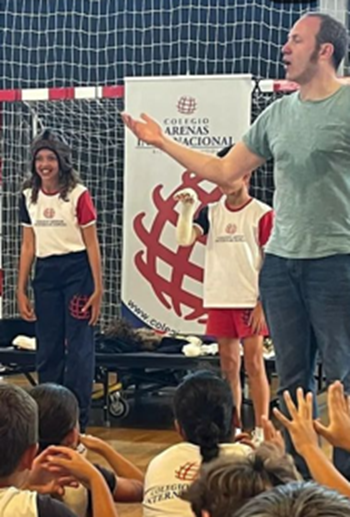
The experience of working in Europe has been an incredible privilege. During school visits in the Iberian Peninsula, Lanzarote and Central Europe I have been met with great enthusiasm for my work from the children and staff. Although I have been performing for international and bilingual schools I have always been mindful of being clear (something I touched on in my previous blog which you can read here). I have needed to consider the stories I am telling from the perspective of a non-native speaker of English; is that phrase necessary? Is that word correct? Are my gestures supporting what I am saying?
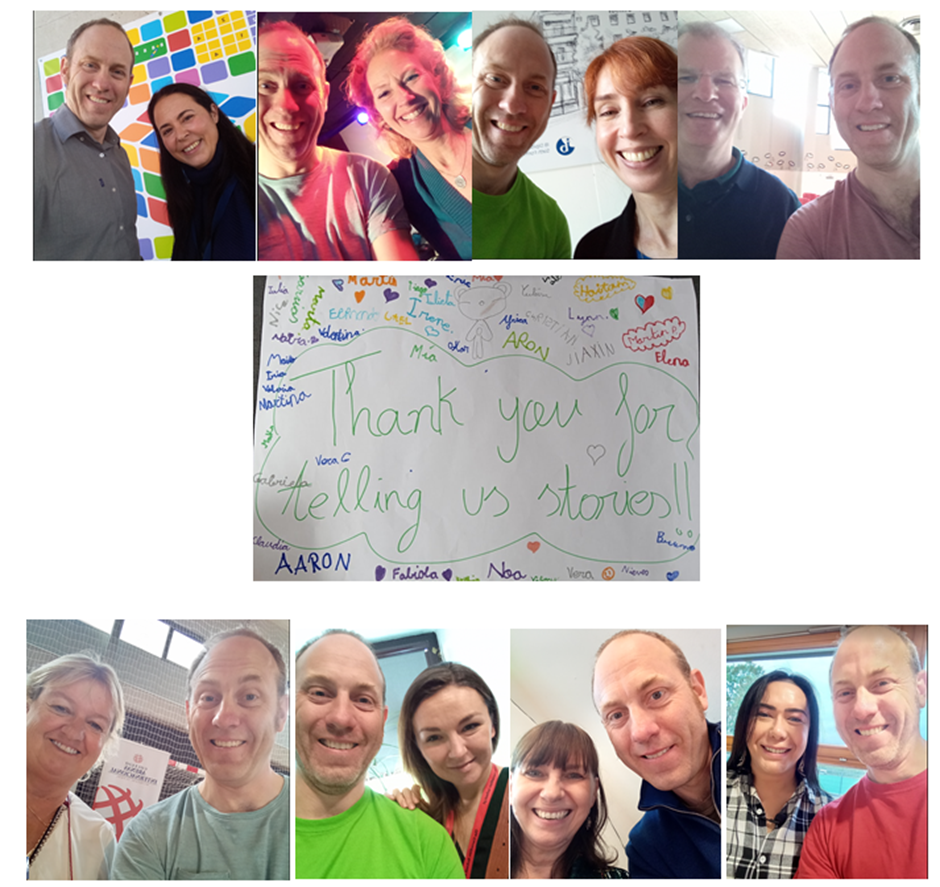
The feedback from the audiences and schools has been very positive:
“Absolutely fabulous!! The children were so enthralled and even the shy children wanted to participate. John really connected with the children and they felt important. I was a very special moment for them. We would love to have him back in the future”. Teacher, Madrid, March 2024
I find myself constantly impressed that very young children follow my stories seemingly effortlessly. I am sure that for some, this isn’t the case and that my sessions were overwhelming. I have had a taste of this as I have attempted to navigate the different languages and systems of the various countries. I have some wonderful memories of wandering around places like Barcelona, Setubal and Warsaw but it hasn’t always been straightforward. Ordering an apple turnover thinking it was a cheese roll or riding the wrong tram/train/bus because I couldn’t read the signage – there have been some very funny moments!
It has been a fantastic month but I have been travelling alone. I have done a lot of travelling but the last time I went abroad for an extended period alone was Sharjah in 2017 (you can read my blog about it here) when V was just nine weeks old. She is now seven and I miss her hugs and laughter. Fortunately, Whatsapp and Zoom allow for virtual chats with loved ones and I fill my time with walking and geocaching. I have also been lucky to be supported by Alberto and Marcela at Dream On and some brilliant teachers who are passionate about stories and who have helped me be my best at each school. Thanks to the support of all these people I am making memories that will last me a lifetime.
So what am I going to do when I leave Germany? When I return to the UK I will be supply teaching until the summer when I have storytelling bookings for Bristol, Surrey and East Sussex Libraries. Dream On have also asked if I would be interested in working with them again next year. How do China or South America sound to you?
Dream On work all around the world, bringing English speaking storytellers and schools together. To find out more about their work, visit their website or follow them on Instagram.
In a Q&A session in Warsaw I was asked about how oral stories are passed through generations. This is how I explained it to the audience.
Imagine history is a game of Chinese Whispers. The story is told, heard and passed on. In this instance I passed “She sells sea shells on the sea shore!” which became “Lis i kot!”. This simple, funny example highlights a few things which are relevant to stories and storytellers.
In the game, my whisper was misremembered as it is passed. Misremembering can be accidental but it can also be deliberate; reinterpreting/sanitising/reimagining a story for a purpose. Does misremembering matter if it’s a good story? That would depend upon the storyteller’s purpose. Time and personality can also be variables. In my Chinese Whisper game, I had five volunteers. I think my whisper was initially misheard and adapted but could one of the volunteers have changed it intentionally? Whilst some stories have evolved over hundreds of years, in my time as a storyteller I have certainly tweaked the narrative of the stories I work with regularly and honed my phrasing to suit my style and purpose.
The other interesting dynamic in the game was language. My whisper was in English but when I asked for the whisper to be announced it had been translated into Polish. When working with second language English speakers I am mindful that we are also practising speaking and listening skills . I try to use my words carefully and economically to make my stories more accessible. I also have a heightened awareness of my choices of gesture to complement rather than detract from the spoken word. This doesn’t mean dumbing down but becoming more efficient with the quantity and richness of vocabulary. This is a lesson which I have also taken into my work with younger children.
Whether, as I have done recently, we are telling stories to children in Britain, Portugal, Spain or Poland, the messages we send and how they are received and reinterpreted matter to our purpose as storytellers. Only through the clear communication of narrative can we hope to be ultimately successful.
On Monday I took a trip down memory lane as I visited Haringey Libraries.
It’s ten years since Haringey’s Libraries recommended me to tell Michael Morpurgo’s Private Peaceful, a project which would bring my work to the attention of libraries across London and create a platform for me to tell The Twits to a national audience. Private Peaceful was a wonderful, emotive project. The story showed off my talent for voices and was a further development of my unique style of storytelling presentation (somewhere between a one man theatre show and a storyteller) which came at a poignant moment in the country’s history (100 years since the beginning of The Great War). As we travelled around Haringey, many of the staff could still remember seeing the story performed.
The reason I was in Haringey was to revive another of my projects. In 2016, I developed a session for library setting to coincide with the 400th anniversary of Shakespeare’s death. Haringey invited me to present it again to mark the 400th anniversary of the printing of the first folio of Shakespeare’s work.
The significance of William Shakespeare to English literature cannot be overstated. Not only did he give us a canon of plays and sonnets which are famous around the world but he added words to the English language. Shakespeare is also responsible for a host of memorable and quotable phrases including to be or not to be that is the question? The question is, eight years after I developed my edutainment presentation, would school groups still recognise its relevance and value?
The content of the session is based around telling Romeo and Juliet, Henry V and A Mid Summer Night’s Dream. These stories were chosen as they reflect Shakespeare’s tragedies, histories and comedies allowing for discussion of why people went to the theatre, how Elizabethan plays were performed and the relevance of Shakespeare’s plays in the 21st Century. As well as introducing the audience to iambic pentameter, in 45 minutes I encourage the children to decode Shakespeare’s speeches for their gist and details. I also use water pistols to great effect to explain the themes of love, mischief and confusion.
Fortunately, the session has aged well. I had been concerned about remembering the verse but I needn’t have worried as the famous speeches flowed with energy and enthusiasm again. The response to the three presentations has been astonishing with high praise from one teacher which had me quite emotional.
I just wanted to say a big thank you for the great sessions today – I really enjoyed them and you could see yourself the response from the teachers, children and staff – how much they enjoyed the sessions as well! Librarian, Haringey, Mar 2024
Having enjoyed such a positive and impactful day, I hope writing this blog will mean it’s at least once more unto the breach dear friends for this session before I consign it to the past.
It’s almost the Easter holidays. I have been storytelling in schools again for almost seven months and things are going well. In the four years since lockdown paused my storytelling mid Yorkshire library tour I have had a lot of time to reflect and have concluded that I was working too much, was very tired all the time and that this had consequences personally and professionally. I am now far more mindful of over doing it. I tried not to overstretch myself in World Book week (a good job I didn’t as I had a stinking cold) and I have tried to balance storytelling and supply teaching against my well being (family time, swimming and geocaching). The impact can be seen in the feedback:
“John Kirk was engaging and brought the stories he told to life. The content was pitched well from Early Years up to Year 6. All the children in our school community were included and played a key role. For our youngest children, the fairy tales were a lot of fun. They were taken on a journey and loved every minute. Our older children sampled stories similar to some of their favourites from Roald Dahl, opening up and promoting wider reading experiences. The buzz from the day was fantastic, thank you John!” Teacher, Crowborough, March 2024
“Thank you for all your enthusiasm and story telling today. You have certainly made World Book Day at St Dom’s come alive!” Teacher, Harpenden, March 2024
“Thank you so much for all your sessions today! You were amazing!” Teacher, Worthing, March 2024
A lot has changed in my life in the last four years but through everything I have retained a love of stories and a passion for high quality storytelling for children. Not every day will be as positive as those I have had recently but I plan to keep learning, developing and enjoying the opportunities that come my way.
Here are five brilliant reasons a teacher should book a storytelling visit.
There are a lot of very skilled teachers, who can deliver a story to a class with enthusiasm and expression but a storyteller will tell a tale without a book. Storytelling is one of the most ancient and accessible art forms, a means of exchanging narrative beyond books, a captivating performance skill and can be complimented with singing, music, props and interaction.
Everyday all over the world, teachers read children stories but a storyteller visit can enhance this experience. A day devoted to story, centred around a storytelling visit can be a break from the usual curriculum and make the learning feel more special and more memorable for the class.
In a world of ever tighter budgets, where trips out are more difficult and with family’s feeling a rise in the cost of living, booking a storyteller for school is an affordable way of enriching a child’s cultural capital.
Maybe the class teacher would enjoy presenting a story to their class but booking a storyteller offers an experience without adding excessively to teacher workload.
When you book a storyteller you are booking their expertise; you are trusting that their content will meet and add value to your objectives and that you might be able to transfer some of their techniques into your own practice.
“The children were really engaged in the activity and also could recall the story in lessons which really helped”.
“You were very entertaining and engaging. You were very good at including our SEN children in the storytelling session too”.