Category Archives: Drama in Education

Qualifying my contribution to children’s learning

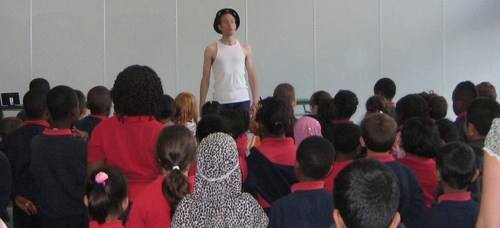
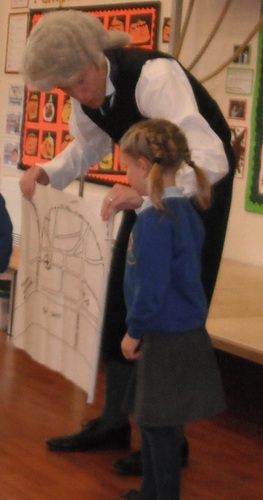
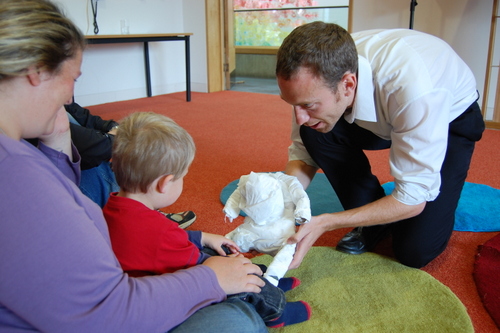
John Kirk is a storyteller and drama facilitator specialising in drama workshops and theatre for young people.This week I am using my blog to qualify my impact on learning by sharing some of the testimony I have received in the past 3 months.

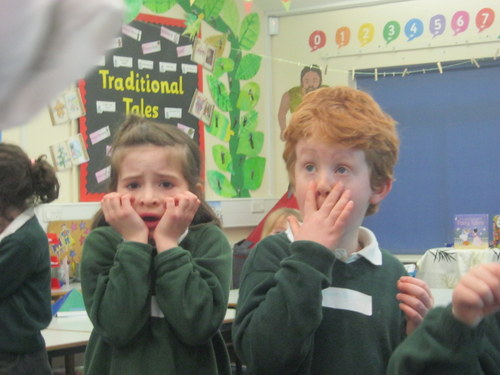
“The day was absolutely fantastic and the feedback from children and parents was brilliant. It was lovely to see the children echoing the language you used when writing stories the next day. They all thoroughly enjoyed the day so thank you!!”  Teacher, Wychwood Primary School, Shipton Under Wychwood (Traditional Storytelling and Presentation Day, January 2014)

“I can honestly say that this was one of our most successful days!
John totally engaged the children and especially a group of boys who usually show very little interest in drama, storytelling or writing! The next day the children were still talking about John’s visit and the tips he had given them for story writing. I call that money well spent!” Headteacher, Gillibrand Primary School, Chorley (Classic Storytelling and Workshop Day, February 2014)

“Again, a fabulous day much enjoyed and talked about by the children all week… They have also been inspired to write their own poems and stories – ” Teacher, South Malling Primary School, Lewes (Alfred Noyes’ “The Highwayman“, February 2014)

John Kirk is a storyteller and drama facilitator specialising in drama workshops and theatre for young people.Each of these teachers work in very different social, economic and geographic settings and yet their feedback demonstrates that my stories and workshops manage to transcend such obstacles, appealing to young people nationwide.  They also point to a lasting impact and legacy.

Positive and constructive feedback is always appreciated but I’d like to finish this piece by sharing a lovely comment I received from a school in Liverpool.  Leaving London at 5.30am I made it to Anfield for a 10.45am start.  I led a story and workshop session and was back in the big smoke by 7.45pm.  The children were wonderful to work with but getting this comment from their teacher made an epic trip to Merseyside more than worthwhile.

“The children got a lot out of the workshop! Thank you.”  Teacher, Whitefield Primary School, Liverpool

Related blogs

Fairy Tale Stepmothers do ave’em! – my thoughts on female Fairy tale villains

See also A Tale of Two Newspapers – a piece about performing in Chorley (my home town)

See also “The Highwayman” from an Ostler’s point of view – my thoughts on rewriting Alfred Noyes’ “The Highwayman”

See also Why Mickey Flanagan isn’t joking – my thoughts on quality

“It was so much better than German!”

John Kirk specialises in drama workshops and theatre for young people.At the beginning of January I was in Essex to help inspire a group of young writers.  I wanted to present a workshop in which the participants didn’t feel they were really doing any work.  As absurd as this may sound – I ran a creative writing workshop without doing any writing!

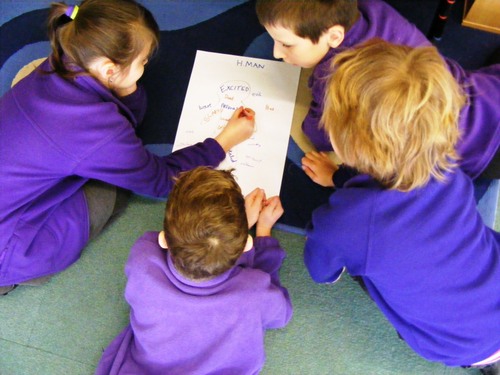
As a trained actor my strength is in the spoken word and its delivery.  Through games and activities I helped the group explore short stories and the work of Edgar Allan Poe.  Here are some of the games we played:

Exploring quality of their content and how we can manipulate atmosphere.

Person A sets up a simple mime.  Person B questions it.  Person A tells a lie about their action and that lie becomes Person B’s truth.  The quality of A’s lie will effect the quality of B’s mime (I’m eating a spicy chilli is far easier to demonstrate than I’m eating).  The game then develops as Person B informs Person A what they are doing.  Whatever B says A accepts as truth.  It is in B’s power to manipulate the scene (A is sitting on a chair watching television and B begins an interrogation).

John Kirk is a storyteller and drama facilitator specialising in drama workshops and theatre for young people.Building short stories

A small group is challenged to tell a story.  Each person in the group is responsible for a section of that story which must have a clear beginning, middle and end.  A character, a location and object are offered as a starter to the group).  As the group build their story ideas about tense (how does “I” rather than “he” effect a story?), sentence structure and vocabulary are introduced before the story is presented to the rest of the group.

Eventually my success will be qualified by how the participants take the ideas they explored on their feet into their written work.  For now though my success is qualified by their words…

“It was better than any day at school… Changed my view of storytelling.”

“Today was really good!  It was so much better than German!  I learnt a lot about building tension and suspense and I have learnt how to use it in my own work.”

“This experience was such a great learning curve for anyone invited and I will take skills with me.”

I really enjoyed today… everyone got involved with acting and storytelling.  It was lots of fun!”

“Thank you to John Kirk for a great experience toady, we learnt a lot of new things and had a really enjoyable morning.”


John Kirk is a storyteller and drama facilitator specialising in drama workshops and theatre for young people.
A letter from a student after a secondary school workshop exploring short stories and Edgar Allan Poe.
John Kirk is a storyteller and drama facilitator specialising in drama workshops and theatre for young people.
A display of Tweets after a Secondary School Workshop exploring short stories and Edgar Allan Poe.


How Bertholt Brecht changed my life

Stone Soup 5As a student I was introduced to the ideas and work of Bertholt Brecht.

Bertholt Brecht was a German playwright and drama theorist who lived in the early part of the 20th Century.  The theatre of the time was shallower and more melodramatic than the theatre that would be familiar to us today.

Brecht was an advocate of Epic Theatre and sought to readdress the performer-audience relationship, believing that theatre should instruct as well as entertain its audience.

Rather than allowing the spectator to relax, Brecht wanted them to think about what was being presented.  He developed techniques to alienate audiences into objectivity and in his essays he talks about how an actor might encourage this alienation.

Over a decade has gone by since I first read Brecht’s ideas but today many of them are recognisable in my storytelling.

Directly addressing the audience 

Brecht believed that to readdress the relationship between performer and audience meant tearing down the conceit that the audience is somehow invisible to the performers.  In removing the “fourth wall” from the stage Brecht acknowledges the Elizabethan theatre in which delivering a soliloquy to the crowds would be commonplace.

As a storyteller I would find it almost impossible to share stories without looking at the audience.  My narratives often depend upon a more active rapport as the audience become characters or participate in activity and discussion.

IMGA0002Simplicity

Brecht talks about stripping back the paraphernalia of theatre (the lights, set, costume etc) to expose the audience to a story rather than allowing them to hide behind the experience.

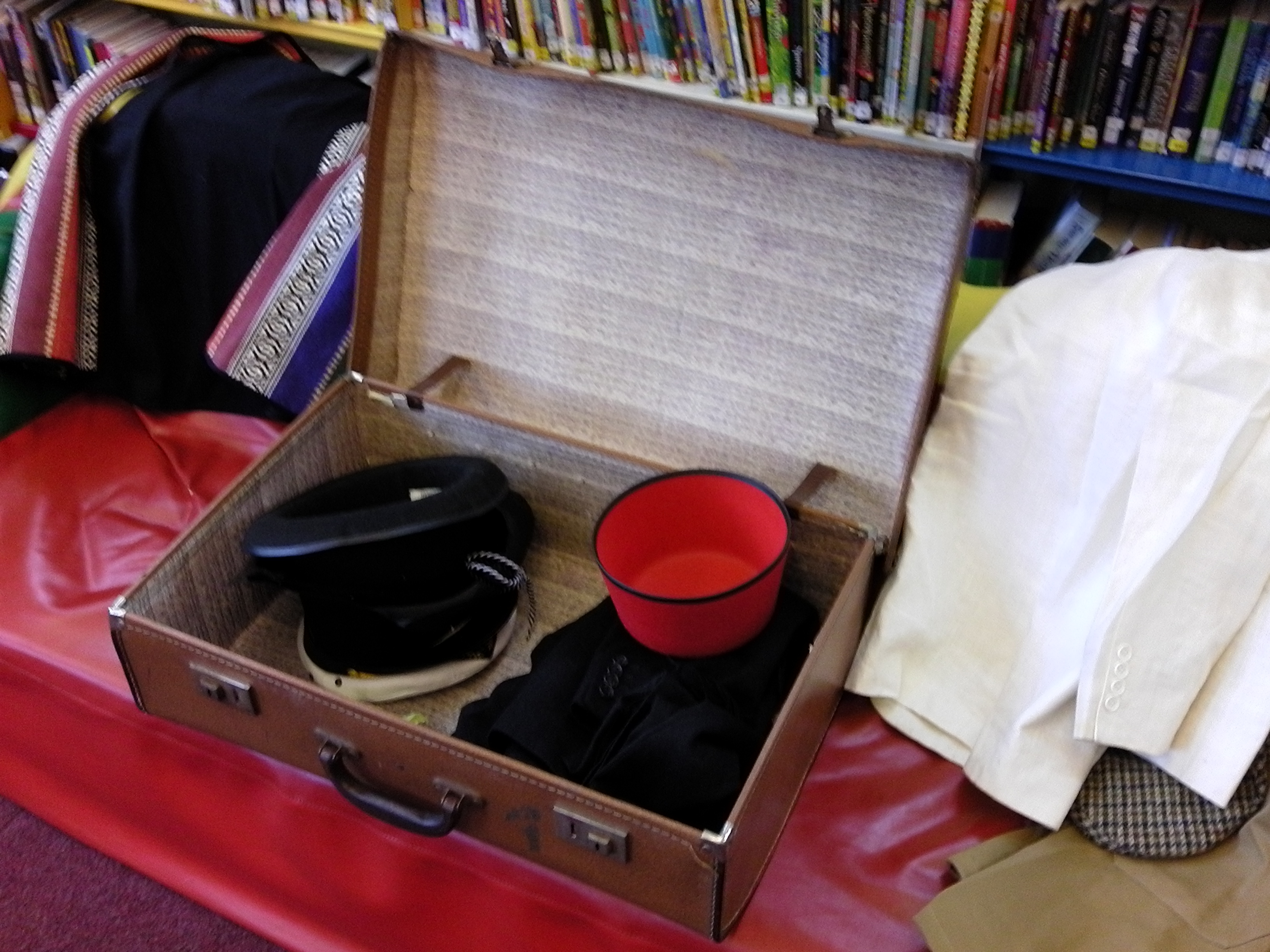
A stripped back style isn’t really a choice when you carry your set, costume and props in a suitcase!  I do believe that in stripping away some of the frills of performance my audiences are more focussed.

My further thoughts on technology, concentration and storytelling

Characterisation 

Bertholt Brecht admired the Chinese style of acting in which the performer demonstrated their character.  They do not become the role but play the gestus (a suggestion) of the role.

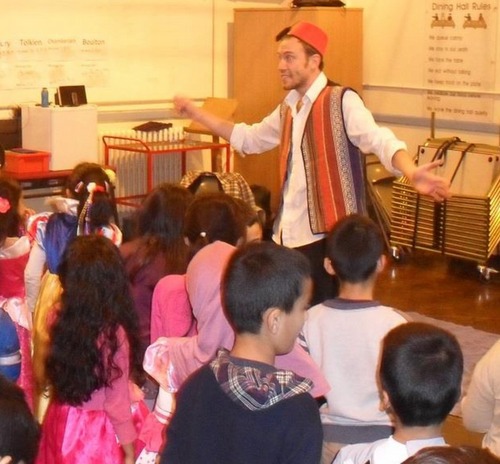
In my version of A Christmas Carol I play as many as 14 of Dickens’ characters, sometimes for no more than a few seconds.  The character is a vehicle for my narrative.  I must portray the gist of the character quickly with no time to consider my emotional connections to a part.  With small parts I achieve these lightning transformations by making distinct physical and vocal choices (Scrooge is spiky and nasal where Bob is small and timid).  Of course I work with young audiences so I incorporate bits of costume or props to suggest different characters.  The result is very entertaining (particularly when I get confused!) because its visually dynamic but it also forces audiences to concentrate.

My thoughts on the use of subtext in Naturalistic performance

Empathy vs Choice

Brecht believed that empathy shouldn’t be theatre’s primary currency.  Brecht was acutely aware of the theatre’s power to enlighten people to broader social issues.  Through his work he attempted to detach audiences from the sentimental and move them to take action by encouraging his actors to clearly present their character’s choices.

Brecht the playwright would probably have approved of the way I structure my presentations as I will happily mix narrative with drama activities.  In Brecht’s plays he regularly juxtaposes presentation ideas as narrative is interrupted by dramatic songs.  This means, like in a Music Hall presentation, his scenes can often stand alone and that the audience are again reminded that they are watching a play.

As I generally interpret other writer’s works I am rarely positioned to state personal opinions for the duration of a narrative but I will try to convey my thoughts and feelings on a story to the audience.  This could be in the choices I make in the wording of the adaptation or a pause or a look to the audience highlighting what I see as a crossroads for a protagonist in the narrative.

Unlucky MummyIt is difficult to say whether my audiences empathise with my presentations.  My style of presentation means that they probably remain quite objective toward characters (it can’t be easy to empathise with characters when I’m continually changing roles!) but empathy is still important to my stories (if we don’t care what happens to Hansel and Gretel in the enchanted forest then there is no real peril or adventure).

Truth in Non Naturalistic Storytelling

When we talk about alienating an audience from a presentation we must be careful about removing the truth entirely.  Non naturalistic storytelling is still storytelling.  At times it may be heavily stylised and may jar with an audience’s expectations but it’s success will depend upon a world being credibly sustained.  In my own work it is vital that the audience quickly accept that I will be demonstrating lots of different characters who will exist to serve the story.  If style takes precedence over substance then the story has been failed.


I believe that it was studying Brecht and non naturalistic storytelling techniques that lead me to be the storyteller I am today.  We are fortunate to have the benefit of past wisdom at our disposal when we make art today.  I could probably analyse my style in the light of other practitioner’s ideas, drawing comparisons and justifying their influence on my work but I feel that learning about Brecht has allowed me the freedom and confidence to tackle complicated and amazing stories that I couldn’t otherwise have done.

My further thoughts on the value of training and experience to the storytelling experience

It’s only by better understanding rules about form and content that we can begin to bend them to our advantage.

Brecht on Everyday Theatre

You artists who perform plays
In great houses under electric suns
Before the hushed crowd, pay a visit some time
To that theatre whose setting is the street.
………………………………………
Here the woman from next door imitates the landlord:
Demonstrating his flood of talk she makes it clear
How he tried to turn the conversation away from the burst water pipe.
A drunk gives us the preacher at his sermon, referring the poor
To the rich pastures of paradise. How useful
Such theatre is though………………
These actors do not, like parrot or ape
Imitate just for the sake of imitation, just to show that
They can imitate; no, they
Have a point to put across. You
Great artists, masterly imitators, in this regard
Do not fall short of them! Do not become too remote
However much you perfect your art
From that theatre of daily life
Whose setting is the street.
Take that man on the corner: he is showing how
An accident happened. This very moment
He delivers the driver to the verdict of the crowd: the way he
Sat behind the wheel, and now
He imitates the man who was run over, apparently
An old man. Of both he gives
Only so much as to make the accident intelligible, and yet
Enough to make you see them. But he shows neither
As if the accident was unavoidable. The accident
Becomes in this way intelligible, yet not intelligible, for both of them
Could have moved quite differently; now he is showing what
They might have done so that no accident
Would have occurred. There is no superstition
About this eyewitness, he
Shows mortals as victims not of the stars, but
Only of their errors.

“The Highwayman” from an Ostler’s Point of View

I also offer a “Highwayman” workshop!!

Highwaymen are often referred to as “Gentlemen of the Road” but they were in fact nothing more than common thieves.  “Stand and Deliver!” (the command rather than the song), was last uttered by a Highwayman in Britain in 1831 but their exploits were (and are) popularly romanticised.  Alfred Noyes’ epic poem chronicles the night time adventures of one such rogue and the Landlord’s daughter, who tragically meet their ends in the cobbled inn yard.  Alfred Noyes’ “The Highwayman” is a brilliant story of love that has been reinterpreted by artists, film makers and musicians around the world.

As part of a workshop exploring Alfred Noyes’ “The Highwayman”, I was challenged to reinterpret the poem for a group of Primary School children.  This video is a part of the result and this blog came about as more and more people watched it online.

PLEASE VISIT 1000 UP! TO VIEW THE VIDEO

Rather than tell the Highwayman’s story I wanted to explore the world of the other characters mentioned in the poem.  I wanted the tone to be quite serious so taking Bess’ perspective was out.  The Landlord and the King’s Guards presented possibilities but the most interesting character seemed to be Tim the Ostler.  In the original poem Tim is mentioned by name but appears in just one stanza:

“And dark in the dark old inn-yard a stable-wicket creaked
Where Tim the ostler listened; his face was white and peaked;
    His eyes were hollows of madness, his hair like mouldy hay,
    But he loved the landlord’s daughter,
The landlord’s red-lipped daughter,
Dumb as a dog he listened, and he heard the robber say—”

Who was this man?  Why was he there?  What was his role in events and what was his story beyond the inn yard?

What follows is the transcript of the above video.  My version is actually longer than this as I introduce the Captain of the Guard and explain what happens to Tim (I reserve those verses for live presentations).

What was most striking for me in Noyes’ poem was his rhythm and rhyming structure.  When I listen to the poem I always think about a horses hooves and I wanted my poem also to respect a regular meter (which it loosely does).  I also love his imagery and try to include some bold similes and metaphors.  Like Noyes I was drawn to his original themes of love, jealousy and violence but I have chosen for Tim the Ostler to recount his bitter betrayal rather than a third party.


Tim the Ostler

Now the landlord he has a daughter, whose lips are as red as a fire

Her hair is a perfumed cascade you couldn’t fail to admire

Oh how I longed for this young girl, who goes by the name of Bess

My master’s black eyed daughter

She smiled at me, his daughter

I dreamt that this sweetest lady would someday be my Princess….

I also offer a “Highwayman” workshop!!

An INSET Epiphany!

John Kirk specialises in drama workshops and theatre for young people.In 2011 I worked on a Creative Partnerships project in Lincolnshire.  The project was massively successful and attracted plaudits from educational professionals across the region.  That Autumn I was invited to share my ideas with a conference of new Headteachers in Lincolnshire.  I was then asked to lead a training event for four of the Head’s schools relating to creativity and the Summer Olympics.  18 months I was invited to lead another training event.  The theme of the session would be Mental Maths.  I was set the challenge of offering creative ideas for engaging children (foundation to key stage two) with Mental Maths.

So it came to pass that at Epiphany in the year 2014 I followed the A1(M) and came upon an inn in Lincoln (well, a Best Western anyway).  Now, it is a well known fact that this Wise Man is diabolical at Mathematics.  The people who know me best would confirm that the idea of me teaching anybody else about maths is hilarious.  Why then did I get such positive feedback on the INSET?

“Thank you so much for the training, staff said it was the best training they have ever had!”

In the first part of the session I presented a series of games.  The participants then applied their specific need (to consolidate or introduce Mathematical concepts) using my selection of games.  The learning was not restricted to Maths as Sciences, Languages and Humanity subjects entered the discussion.  In the second part of the session we explored how we might use narrative and storytelling technique to include our groups in Maths based storytelling.  The participants created wonderful stories which considered number bonds, using money and addition as well as other aspects of learning (literacy).  It seemed to me that the participants found a lot of energy and freedom in our exercises.

John Kirk specialises in drama workshops and theatre for young people.The epiphany’s of my INSET days aren’t as shiny as The Three Kings gifts but they are things which all of us need sometimes:

A Different Perspective – I am an outsider to the group.  When I work with a group I will have little knowledge of individuals or circumstances.  I will offer constructive criticism based on my experience and will respond to what I am presented.  This is very useful when problem solving or in team work exercises.

Fresh Ideas – I have a unique base of games and ideas which I have developed over a decade of working in a range of environments.  I love sharing my knowledge with other professionals because its in this way that young people are offered a better deal.

Fun – Most people who teach or who have ever been taught will agree that fun is important.  I believe in the valuing the contribution of individuals and collaborating to achieve goals together.  It always important that the atmosphere is friendly and that the participants feel comfortable.

So why was my INSET successful?  It was a success because I am not a teacher, I am a facilitator.  Often the results are within the room before I arrive.  I help the participants to find them.

A Night at the Theatre

John Kirk is a storyteller and drama facilitator specialising in drama workshops and theatre for young people.Just before Christmas the ceiling at The Apollo Theatre collapsed during a performance of “A Curious Incident of the Dog in the Night Time” (see my previous blog on technology for my endorsement of this show). It was reported that audience members in the Upper Circle, Dress Circle and Stalls were injured by falling masonry and the theatre would be closed until the New Year.

My Twitter feed went crazy – I have many friends working onstage and front of house in West End Theatres – some people wanted to express their sadness at what was a shocking event, some people wanted to blame Theatreland for failing to invest spiralling ticket prices in the ageing bricks and mortar.

It got me thinking about the pitfalls of a night out at the theatre. Don’t get me wrong – I’m a big theatre fan.  In my opinion nothing is more spellbinding than the magic of theatre and I would encourage everybody to go more often but what are the risks when you are in charge of a large group?  I’m not going to take a swipe at the theatre establishment because the “incident” (excuse my pun on the name of the show) at The Apollo Theatre was a freak occurrence but taking a large group into any unfamiliar environment has challenges.

First there’s getting there. Sharing information and collecting ticket money can become a cycle of phone calls and letters. Once this is done you have to organise or navigate the transport. This can be a real headache.

Making it to the theatre is not the end of the logistical problems. Minding a large group in alien territory can be stressful and depending on the age of your group can involve anything from mass toilet runs to keeping teenagers out of the bar!

The quality of the show can also present a risk (see my blog about quality and storytelling).  When you book a show you are restricted to what’s playing. Can you guarantee that the production is going to be worth the entrance fee? Its easy to be open minded about quality when you’re spending your own money but with a group it’s a gamble.  Sadly, if your group aren’t engaged by the presentation (and sometimes even if they are) theatre audiences have little sympathy for young people who don’t understand audience etiquette.John Kirk specialises in drama workshops and theatre for young people.

Oh and don’t think that at the end of the show you can relax. When the curtain comes down and the lights go up its time to get everybody home.

When you present it like that it’s little wonder people contact me.

As a bespoke storyteller I am flexible enough to bring the show you want to your location. This means that you get a convenient, professional product at a much more reasonable cost.

I’m used to working with young people so there is an expectation that it will be an audience’s first experience of live performance. My classic and traditional stories are intentionally snappy and incorporate audience participation and other devices so as to engage even the youngest children. In your own environment the skill of listening and responding appropriately can be nurtured and your group remain free to enjoy live performance in their own way.  With older students I offer workshops to explore the themes, characters and ideas behind texts (“An Inspector Calls”, “Chatroom”, “The Crucible” etc).

John Kirk specialises in drama workshops and theatre for young people.A storyteller offers an alternative live performance experience. I believe in the value, power and legacy of quality storytelling and it is undoubtedly a privilege to share stories with young people be it in a theatre, a hall or a living room (see my Unbirthday blog).

In a way, although it was shocking, I’m glad those people were injured by the falling roof at the Apollo Theatre because it proves that live performance is still attracting big crowds.  It wasn’t very long ago that plays in the West End were reporting less than 25% houses and in some ways it would have been a lot more tragic if the ceiling had fallen onto empty seats.

It would be ridiculous if people stopped going to the theatre because they were scared a ceiling might fall down.  More realistically the greatest risks to a group attending the theatre are posed by the ever increasing cost of theatre tickets and the bureaucracy of organising trips.   Whilst I hope that theatre in the United Kingdom continues to flourish I also hope that to those put off a night at the theatre, booking a visiting creative practitioner is an attractive alternative.

Why Micky Flanagan isn’t joking

008A few weeks ago I was thumbing through a copy of “The Metro” Newspaper when I came across an interview with comedian Micky Flanagan.  Flanagan’s comedy may not be to everybody’s taste but one of his answers resonated with me that morning.

…

(Interviewer) What lessons has your career in showbiz taught you?

(Flanagan) Just the same lessons I’ve learned in every other job I’ve done – try to surround yourself with decent, honest people, work as hard as you can and keep asking yourself: ‘Do you really want to do this and can you do it well?’ It’s a serious business and you have to take it seriously. What’s presented is a lot of fun but behind the scenes it’s a difficult job, which takes a lot of hard work to get right.

…

How right you are Micky.

“What’s presented is a lot of fun but behind the scenes it’s a difficult job, which takes a lot of hard work to get right.”

Okay, I’m not a top comedian, promoting a book or an arena tour but I, like Mr Flanagan and many other people out there, care about what I do.

Picture 001If a school were to book me what they’d see is the storytelling session.  It would be polished, entertaining, it might even enhance their curriculum.  What they wouldn’t see is the time put into writing the material and refining its delivery, time spent sourcing the props and costume and ensuring the session was of a high standard.  What they wouldn’t see is 3 years of training, 12 years of working with young people and a life devoted to ensuring the session was of a high standard.  They wouldn’t see it but I hope they would expect it.

Imagine my disappointment therefore when I found the following job advert…

“We are looking for performers who can entertain children aged 3 upwards…  No previous experience required …”

…it went on…

“Also wanted members to join our Theatre In Education team, various performances in primary and secondary schools.”

Did I misread a lazily written advert?  No experience required to work in Primary and Secondary Schools?!

John Kirk is a storyteller and drama facilitator specialising in drama workshops and theatre for young people.Perhaps I’m being unfair but I believe in the value, power and legacy of high quality storytelling.  It should be an immense privilege to share any kind of story with a young person particularly, as is so often the case, if your presentation is that young person’s first experience of live performance.  Too often young people are under estimated and “fobbed off” by unscrupulous organisations trying to make a quick buck.  Of course in this instance I have no evidence that this is the case but the idea of sending somebody with no training or experience to take up a position is scandalous.   What is the impact of a poor experience on the children, the school and other creative practitioners?  If a school is burned by poor delivery they may not be prepared to take a similar risk again.

The other disturbing aspect of my discovery was how little the group who’d posted the ad charged bookers for their work.  I’d like to think schools are wary of low prices.  In the past I have been prepared to negotiate with groups over my charges but have found little success in offering heavy discounts.  Unfortunately though in austere times, a flashy leaflet and a tantalising price tag mean that some will substitute Gucci for Primani.

You might say I’m talking about two separate issues: quality of delivery and value of delivery but there is a probable correlation: if you pay peanuts you get monkeys.

Like Micky says, entertainment is a serious business; if a job’s worth doing it’s worth doing well and you should expect to pay a fair price.

istorytelling

John Kirk is a storyteller and drama facilitator specialising in drama workshops and theatre for young people.Many academics believe, “the attention span of a child is there age plus two minutes”.  In teenagers and adults this apparently maxes out at about 20-40 minutes but by this point in life we are able to refocus on tasks which mean we can do things for longer periods of time (ie watch films).

This rationale is very useful to anyone working with children and young people.  It helps to determine how long a participant can stay on task, how long it will be until they will need further stimulation or how long you have before distraction (in some cases) leads to disruption.

Sadly some experts believe that with the development of technology people’s attention spans are decreasing.  In a world of high speed information, full of fast moving colour and sound some things seem slow.

I was recently introduced to the idea of FOMO (Fear of missing out).  It’s a concept that explains the need to be hooked up to technology 24/7 and explains anecdotal evidence from parents and teachers of a need to teach younger and younger children the dangers of technology and in-school technology agreements (the class are allowed to check their phones in plain sight rather than under the desk).

As a storyteller I have a fear of missing out and sometimes fell that I’m old school.  I’m all for technology but my medium of communication remains much more low tech.  I use the costumes and props I can carry in a suitcase to accentuate a story told using my voice and my body.  My devices are generally theatrical and not electronic.

Some work surfs the new media wave.  In the past year I have seen two striking pieces of work supported by The National Theatre.  “The Animals and Children went into the Streets” (1927) and “The Curious Incident of the Dog in the Night Time” (Mark Haddon).  Both incorporated multimedia boldly, combining sound, light and projection techniques to extraordinary effect.  For all the bells and whistles though , these pieces have brilliant storytelling by exceptional creative talent at their heart.

John Kirk is a storyteller and drama facilitator specialising in drama workshops and theatre for young people.At the same time as society embraces a new media revolution, nostalgia continues to infiltrate our culture with businesses offering us more and more vintage clothing, furniture, food and even experiences.  Perhaps this is a sub culture but it does point towards people yearning for something simpler.

Storytelling is embedded within our culture and I wholly believe in its value, power and legacy.  Exchanging stories is a privilege and when you work in front of a live audience the relationship is always special and different.  Storytelling is everywhere you look and I’m not suggesting that we are in danger of losing this most ancient of traditions.  I am questioning how this brand of live entertainment fits into a world where baby’s first book is a tablet computer.  Is oral storytelling with simple props and costumes enough of a reward for patience or is it too much effort?  Is radical innovation the key to engaging a digital generation?  We’ll have to see…

—

istorytelling

You can’t rewind this if you leave

its not for tablet or box set.

There’s no multi player function

and you cannot hit “Refresh”.

*

A tweet won’t do it justice

and neither will your lens.

If you put this onto Youtube

you’d spoil it for your friends.

*

My interface is wireless

and my network is offline.

My errors are unique

but my “selfie” is defined.

*

I share my profile everyday,

I’m low tech but compelling.

I may lack tricks but I’m still proud

of my storytelling.

Storytelling and Code Breaking

Can you crack the code to continue the story?John Kirk specialises in drama workshops and theatre for young people.

1911 1955 1912 1916     1937 1972    1920 1981 1951!

Where A is 1908, Z is 2000 CODE IS FUN!

You might be thinking, what has code breaking to do with storytelling? Well, my work is nothing if not varied and I was recently invited to launch a Homework Club at a Library.

The challenges of storytelling for informal settings are numerous: who will attend, how old will the participants be, how can we best use the time to deliver something which will be engaging and not patronising?

On this occasion I came up with the idea of creating a story around a fictional counter terrorism agency to meet the client’s brief.  The agents were told at an initial briefing that the unit had been infiltrated by an enemy agent.  It would be the task of the group to crack the clues and root out the villain before the unit was destroyed.  Jack Bower meets Cluedo – the game was afoot!

As well as the date cipher above, I used the Dewey system and the characteristics of books to disguise information (page numbers, line numbers, even the number of characters into a line!)

John Kirk specialises in drama workshops and theatre for young people.

Allowing the participants to approach the narrative in a free form way is a risky venture but attempting to crack my ciphers was an important part of the session.  Like homework, the ciphers required the young people to work for their reward using problem solving and research skills.  The pay off for the young people was revealing their role in the narrative which they were then able to use to complete the story, taking part in a further game of conspiracy and intrigue at the end of the session.

It was encouraging that the group saw the session through to its conclusion.  It would be quite easy to struggle with the puzzles and drift away from the exercise but the group persevered and the final game was a hail of accusations, bluff and enthusiastic double bluff based on what they knew about themselves from the previous games.

In the end the enemy agent was brought to justice and everybody seemed happy with my deviously vexing games.

As I basked in a job well done one thing was clear – I wouldn’t have got away with it without those pesky kids!