All posts by johnkirkstoryteller

About johnkirkstoryteller

John Kirk - father, teacher, compere, poet, workshop leader, storyteller.

The (Birthday) Party season

At this time of the year I have usually downed tools for the festive period but with birthday party bookings to prepare for the Christmas week this year is a little bit different.  My usual feeling of triumphant relief at reaching the end of another year sane and solvent is still there but I can’t afford to get too demob happy as there’s still work to be done.

For me it seems birthday party bookings are like buses; you do none for ages and then three come along at once.  The three parties I’ll be entertaining at couldn’t be more different.  The first is a first birthday and will consist of songs, rhymes and stories, the second is for a six year old where I’m doing a narrative version of “The Polar Express” and the final one is for a nine year old and is to take place in a Pizzeria (I hope somebody warns the other customers!).

With every passing year I become more confident within my repertoire.  I know which stories will be winners and I understand the combinations to tell them in so that a set will be successful even if this means telling the same stories again and again but every so often I get a bespoke project; a new challenge, an excuse to develop new material.  Some bespoke projects will be more work than they are worth but just recently I worked up Sleeping Beauty, Rumpelstiltskin, Beauty and the Beast and reworked the Elves and the Shoemaker for some traditional tales and Christmas storytelling sessions.  I have previously blogged about the session I ran retelling the story of the Prophet Yusuf but I also had the opportunity to work up some Russian folktales for a school in Hampshire.  Here is their feedback on what we got up to…

“The visit was brilliant. We all enjoyed the stories which were perfect for our topic. We felt that it was pitched perfectly and the participation of children made it memorable and thoroughly enjoyable. Our children went on to tell and write their own stories based on this experience.A huge thank you and assurance that we would be keen to book John again and recommend him to others schools”.

Teacher, Fareham, November 2018I 

Whenever I do a visit, whether it be to a school, a library or a literature festival the aim is to do the very best work possible and in recent years there has been a very definite correlation between the calibre of what I showcase and the plaudits I receive.  When I do a bespoke project I often only get one shot at getting it right and in the case of a birthday party there’s the added pressure of really not wanting to spoil the special day.  Making a good impression at a library may have more obvious rewards than making a good impression at a birthday party but you never know who is watching or where an encounter may lead so although it may be a private booking its as important as anything else I do (the last birthday party I did lead to two days of work at a school).  So this Christmas as I digest my turkey I’ll also be carefully chewing these projects over and thinking about how I can make them memorable, enjoyable and above all fun.

If you’re interested in a bespoke storytelling experience or are looking for a storyteller contact me.

Wishing you a very Merry Christmas and a peaceful and prosperous new year.

The Enormous Crocodile with the Roald Dahl Company

In September I was invited to meet with the Roald Dahl Company in central London to discuss the work I had been doing with “The Twits” over the past two years.  They wanted to know more about my version of the story and we discussed access and how storytelling could help Dahl’s work reach more people.  To walk into Roald Dahl HQ and to talk about stories was one of the biggest thrills of my life.  I had been worried about the meeting having had some issues with the licence earlier in the year but from that very first meeting Roald Dahl team have been very supportive.  In late September a producer from the company came along to watch me perform in north London.  This presentation became the basis for discussing a new project for next year.

“I’ve got clever plans and special tricks.”

I am pleased to announce that in 2019 with the support of The Roald Dahl Company I’ll be telling Roald Dahl’s “The Enormous Crocodile”.  This is a tremendous opportunity to tell a popular, short story by perhaps this country’s most celebrated author and to engage and inspire a very young audience (probably four year olds rather than the six year olds who loved The Twits, Hundred Mile an Hour Dog and The Chamber of Mischief) in stories and reading.  It’ll also be a chance for professional reflection and development as I see inside and learn from a very respected, high calibre creative organisation.  In the coming weeks I’ll be allowed access to some of the Company’s resources as we work up this story and revise my presentation of The Twits.  For the first time since my last theatrical bow in 2007 I’ll be part of a larger creative team which includes Joseph Attenborough as composer, Dan White as artist and excitingly, Amy Hodge who will act as dramaturg, director and co-conspirator.  I can’t wait to get started!

I’ll be launching the story in March and will announce more dates for both The Enormous Crocodile and The Twits in the coming weeks.  If you know a potential venue please tell them about the project.  I’m hoping that libraries and literature festivals will want me to visit to tell this story but I’m also interested in talking to reception class teachers, primary schools and primary academy trusts who feel their schools could be venues for larger multi school presentations and public showings as I try to find new ways of making this story accessible to the most possible people.

I hope this is a story gets everybody excited and that 2019 can be the year of the crocodile!

Imagegate: why it matters to me and why it should matter to all artists

The following relates to a series of social media posts I made on the 6th December 2018. As the matter has been resolved I have chosen to bring the whole story together in a blog for the sake of closure and because it deals with an interesting subject.

Four years ago I was lucky enough to be involved in City Read.  City Read is an annual month long, London wide event during which readers come together to share a single book.  I told “Private Peaceful” in 22 of London’s 32 authorities.  This was huge for my career; in one month I exploded into the consciousness of London’s libraries as I went from working in North London onto a much bigger stage (in 4 years I have gone from working in Hackney, Haringey and Islington to working for over 60 authorities across England, Scotland and Wales).  The project also presented an opportunity to work at The Museum of London in the Docklands.

The booking in question was a weekend event at the Docklands Museum and meant telling Private Peaceful three times in one day to public audiences.  I was technically working for City Read at The Museum of London rather than directly for the museum this was still a huge thrill; my background to this point had been in heritage rather than libraries and I had cut my teeth as a storyteller with Hackney Museum, Bruce Castle and the Cuming Museum.  My day at the Docklands Museum came and went all too quickly.  I was part of a larger event themed around the Great War.  It was a wonderful experience and I had a great time but to be honest I hadn’t thought much more about it until what I’m now calling Imagegate broke this week.

It started when a friend of mine contacted me to say she’d seen a soldier at the Museum of London who looked exactly like me and that she was glad my work was going well.  I joked that I was pretty sure I hadn’t been around to fight the Great War but I’d be interested to see a picture of my doppelganger.  She then sent me a link which left me speechless.  You see, my friend hadn’t been to the museum, she’d been on the museum’s website.  The Museum of London had had another family activity day themed around the Great War and it was my face being used to promote the event.  I meanwhile had had no idea.

Here’s what happened.  All those years ago I signed a piece of paper which allowed the Museum of London to take pictures of my storytelling sessions.  Its not unusual for me to sign such documents and I’ll be honest I encourage libraries, galleries and museums to take pictures so they can use them in the future.  Whenever I give consent for photos or videos to be made its on the understanding that they are shared.  This is mutually beneficial as I can then use the media in my own documentation and promotion (I still haven’t worked out how to take pictures of myself).  In this instance the photo hadn’t been shared after the event but I knew it existed because some time ago in an idle moment I’d put my name into a well known internet search engine and it had popped up as being posted by CityRead in 2014.  Four years on from the CityRead event the picture was selected to promote a family day because staff felt it summed up the kind of activities that would be happening on that day.  For whatever reason I wasn’t credited in the promotion nor indeed was I contacted about participating in the event.

So why does the use of a photo matter so much?  Well…

It has taken me years to hone and develop my repertoire; I have done thousands of gigs and hundreds of thousands of miles, all in the name of building a reputation as a top quality performance storyteller.  Everything you see in this picture; the facial expression, the pose, the clothes and to a point even the words that I’m saying in the photograph, that’s all me and my work yet my contribution to the photograph is not recognised when its reposted.

I spend a lot of time and energy on getting the right permissions to tell stories.  Whenever somebody takes a picture or makes a video of me I immediately lose control of my work.  If they then choose to put their media onto the internet I have to trust that they do this with discretion so as not to compromise my work or my professional relationships.  In this instance, if this photo had been a video the people who trusted me with “Private Peaceful” (Berlin Associates acting on behalf of Michael Morpurgo) wouldn’t have been at all impressed.

The event that my image was used to promote featured a storyteller and yet I was never asked to participate and had no knowledge that the event was even happening.  So whilst there might be a perceived link between me and the event I in fact had no control over its quality as it was nothing to do with me.  The friend who alerted me to the picture didn’t know this and had got in touch to congratulate me on working for the Museum of London.  What if she or any of my followers/supporters had attended the event on the strength of the picture?  They would be disappointed to discover that they had been mislead.  Storytelling is a resurgent art form and its practitioners are as distinct as any other kind of artist.  I would like to be thought of as more than a thinking man’s party entertainer and we have to be careful about devaluing the storyteller’s art as it will inevitably have a negative impact on storytelling’s integrity.

As a result of the image being reused its probable that more people have seen this photo than saw the storytellings I did back in 2014.  Its a fantastic photograph but when my picture was taken it would have been outrageous to suggest to me it would some day be used to promote another storyteller and yet I have been powerless to prevent exactly this happening.  Yes, my complaint has been upheld but the event has already passed.  Saying this I am thankful that my image has only been reposted by a museum and it hasn’t been associated with anything stranger or more extreme.

When I told my story on social media friends and colleagues rallied around me in shared indignation, baffled at how anybody could be so thoughtless / rude / discourteous and to their credit the museum were quick to recognise that they were in the wrong.  They offered to take down the photo, they are reviewing how they use images in future and they also offered to add me to their pool of freelance storytellers.  Perhaps then this cloud does have a silver lining.

There is learning in this for me too.  I’m going to have to become much stricter about when people take photos knowing where the picture will be used in advance.  I’ll also have to look at the images I use on my website; am I correctly crediting photographers and workshop participants and is there a point at which I should really stop using even the very best pictures?

Imagegate has not been a nice episode but it has been dealt with and I can move forward.  I still admire the Museum of London for their incredible programme of educational workshops and as a place I aspire to work.  They took action as soon as they became aware of a problem and it’s my hope that not only I work with them again but that they will consider how they work with storytellers in the future.

Thanks to everyone for their support.

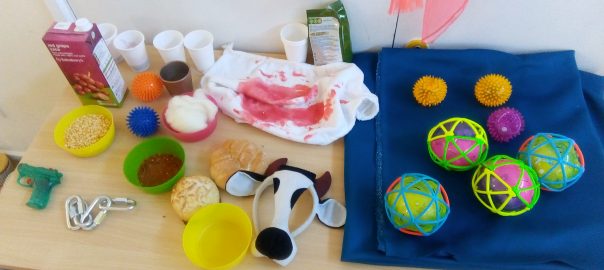
Look at the picture.  What can you see?

This is the makings of a sensory story.  Using the things you see I told the story of the Prophet Yusuf (some may know it as the story of Joseph) in a 20 minute Religious Education session.  In each session I offered a simple narrative, stopping periodically to share these items through touch, sight, hearing, smell and taste and hopefully enhance the participants experience of the story.  Let me talk you around the table.

1. Spices (green bowl) – at the beginning of the session I placed the story and set the scene by playing some Arabic music and encouraging the participants to smell some Arabian spices to get a sense of a Middle Eastern market.

2. Wool (pink bowl) – Yacub and his sons are shepherds.  I was keen for the participants to have the opportunity to touch sheep’s wool.

3. Stretchy sheet and plastic flashing balls – Yusuf has a dream in which the sun, the moon and eleven stars all bowed down to him.  I got some stretchy sparkly material (the sky) and encouraged the participants to gently bounce the flashing balls (the sun, moon and stars) on the cloth.

4. Water pistol – Yusuf’s brothers throw home into a well – it was enough of an excuse to spray the participants with water!

5. Cloth – the brothers then return home with Yusuf’s bloodied shirt and tell their father his favourite son is dead.  In reality this is an old towel with red paint on it.  It looks and feels pretty disgusting and got some great reactions from the participants.

6. Chunky chain – In time Yusuf is thrown into prison.  The chunky chain is heavy, cold and makes a great noise when you rattle it.

7. Grape juice – in prison the cupholder dreams of giving Pharoah wine. As this session was in a school we offered the participants grape juice.

8. Bread – in prison the baker dreams that birds steal bread from his basket.  These loaves had a  wonderful aroma and contrasting textures.

9. Cow mask – Pharoah dreams of 7 fats cows being eaten by 7 thin ones.  This mask has a sound effect embedded in the nose.

10. Split peas (yellow bowl) – Yusuf’s brothers come to Egypt to ask for food.  The participants could run their fingers through the split peas (grain).

I hoped that this range of objects offered a real range of sensory experiences.  Touch and sight are the easiest to fulfill with taste and smell in my opinion the hardest.  I’m a little bit nervous about allergies and if I was leading the session alone the logistics of offering a taste of grape juice would bring the story to a grinding halt.

Sensory storytelling is perhaps my biggest challenge.  They require a completely different discipline to my regular repertoire.  I am definitely on learning curve and although I’m becoming more confident sadly I get very few opportunities to lead these sessions.  This is a shame because the inclusive and accessible nature of sensory storytelling would mean they could work with anybody.  I devised this story with a mixed group of young people in mind; some with visual impairment, some with hearing loss, some with physical and learning needs and I was really encouraged by the way they responded to the sessions.  I hope that they begin to appear more regularly in my schedule in museums, libraries and primary schools.

Postcard from Belton’s Big Book Festival and Loogabarooga 2018

I’d like to start this postcard by apologising for its tardiness; I’ve been meaning to write this down for a while but it’s been a pretty hectic month.
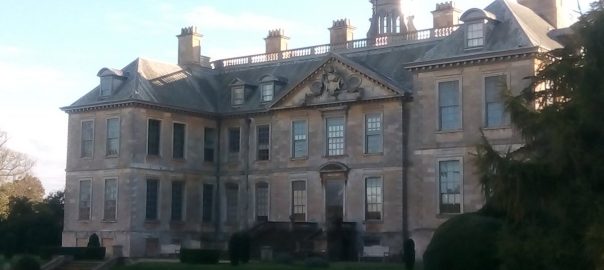
This postcard is from mid October and begins at Belton’s Big Book Festival at Belton House in Grantham, Lincolnshire. To understand how I became involved you have to go back four years to West Berkshire and my work with the wonderful Ann Doody, Rosemary Woodman and the school’s libraries service there. Four years is a long time but I remember the day quite clearly because of a catalogue of unfortunate events. We were due to present Private Peaceful and should all have been very straight forward but I inexplicably missed a train, the taxi almost drove away with my work bag and an accident on the M4 meant we had an epic drive between presentations. It was also the first time I was introduced to the Federation of Children’s Book Groups for whom I went on to write a piece about Dragons.  I worked with West Berkshire SLS again but sadly cuts to services meant that the school libraries service closed within 18 months of my first visit.  I’ll always be indebted to Ann and Rosemary for supporting my work when I needed it most.
Earlier this year I was contacted by Ann again. Now living in Lincolnshire, Ann was working with the Federation of Children’s Book Groups in Lincolnshire, helping to set up a literature festival in Grantham at the National Trust’s Belton House and she’d got in touch to see if I’d like to be involved. Well I don’t mind admitting that this was an extremely exciting invitation. Not just because it would be a chance to catch up with Ann again but because 10 years ago my father had suggested I do something at a National Trust property; a conversation which asi remember it has become a catalyst for telling my first and all subsequent stories. A decade on this would be a chance to fulfill a long held ambition.
The day was brilliant. Belton House in the early autumn sunshine is a spectacular setting and it was lovely to catch up with Ann and Chris Routh (chair of the FCBG who I worked with in West Berks). I had really good turnouts for Dennis and the Chamber of Mischief and The Twits and met lots of people who were enthusiastic about stories, storytelling and books.  Of course disaster was only very narrowly averted. When I set up for The Twits I realised that I’d left Mrs Twit’s walking stick, which I use quite a lot in my telling of the story, at home. Then I had a moment of inspiration.  With a few minutes still to go before the scheduled start and with the audience queuing at the door I legged it to the National Trust’s shop where thankfully they were prepared to lend me a walking stick for the afternoon. Phew!
The next day I was back in the Midlands to be a part of Loogabarooga 2018 (apparently that’s how Loughborough is pronounced in Australia!). Engineering work meant that it was quicker and cheaper to get a bus. Unfortunately the bus stop was outside the university leaving me a fair hike into town admittedly in glorious sunshine.  Loughborough is the home of Ladybird Books and the festival celebrates all things illustration and cartoons so Dennis and the Chamber of Mischief was a natural fit for presentation in their Festival Den although this turned out to be a rather an intimate marquee for my rather powerful water pistols!
The wonderful thing about festivals is that you meet all kinds of people. At Belton I chatted all things babies and houses with illustrator Frank Preston Gannon and at Loogabarooga I was scheduled between Beano cartoonist Laura Howell and author Claire Elsom. It’s very easy to feel inspired when get to rub shoulders with heavyweight talent.
Anyway, it was all done in the blink of an eye and I was back on the train. In years gone by I might have mourned such a successful weekend but these days whilst my work brings me a huge amount of satisfaction I am grounded by my daughter.  It was however an extraordinary weekend which will live long in my memory.  I think the whole thing was best summed up by something I saw writer/illustrator Chloe Inkpen doing. As I was passing her book signing she was posing for a photograph with a young fan but she wasn’t smiling she was beaming.  She was completely right to do so. You see, if at moments like these when all is right with the world we can’t reflect positively on what we’ve achieved and if we can’t savour and enjoy being at the very top of our game then I think that would be very sad.  I look forward to more weekends like this one soon.

Talking to a young child about remembrance

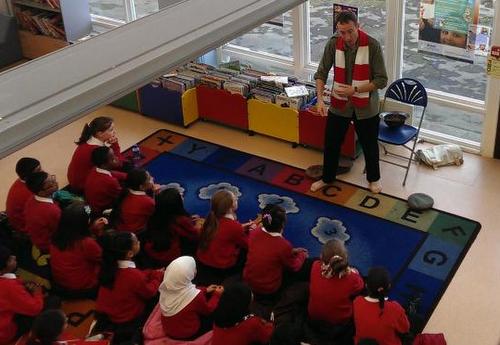
I was asked to lead a storytelling session for a group of 4-7 year olds which reflected on why we remember the Great War and the symbolism of the poppy.  I saw this as a challenge of both tone and content; how to talk about a terrible event in terms which will not traumatise a very young child?  Supposing this to be a dilemma faced by many teachers and families around Remembrance Day (11th November) I thought I’d share how I did it in order to make an important conversation a little easier in the future.

I started by telling the story of The Pied Piper of Hamlyn.  In the story the town is plagued by rats which make everybody unhappy.  A Piper, capable of playing enchanted music, comes to town.  He promises to get rid of the rats and the townspeople promise to pay him handsomely.  When the deed is done the townspeople go back on their word and the Piper leads all their children away.

The story of the Pied Piper is undoubtedly a sad one but it is a great way to talk about feelings, loss and regret.  It is thought that the story was originally told to help explain a loss of life caused by sickness but I wanted to use it to contextualise the devastation of war so I then told it again.  The second time I used the structure of the Pied Piper but told a simplified version of the Great War.  Something like this…

A hundred years ago peace in Europe was in danger.  The countries of Europe would do anything for peace so cities, towns and villages sent their young men to fight; many did not come home.  It was only when the war ended and Europe had its peace that these cities, towns and villages understood the heavy price that they had paid.  When the families of those who hadn’t come home from the war went to find them they found only fields of poppies; fields of poppies that had once been ploughed by farmers, fields of poppies that had then been churned by the bombs and guns of war, fields of poppies that were now lined with silent graves.

A generation gave their lives and their loved ones for what they believed was the right thing and so we might have peace today.

They shall grow not old as we who are left grow old

Age shall not weary them nor the years condemn

At the going down of the sun and in the morning

We will remember them

We will remember them


Between 2014 and 2018 John Kirk has presented multiple storytelling relating to The Great War including Michael Morpurgo’s “Private Peaceful”, Terry Deary’s “The War Game”, Tom Palmer’s “The Last Try” and written educational workshops with Hackney Museum, Redbridge Libraries and Vestry House Museum, Walthamstow.  His Great War edutainment session Band of Brothers: a story of three liars remains available to schools, libraries and museums.  For more information contact me.

From east London to East Sussex

Lauren, Verity and I are on the move and will soon be calling East Sussex our new home.

It’s been a very stressful year with Lauren doing a 100 mile commute twice a week since June but we are now looking to our future in Lewes.

This is going to mean more earlier mornings and more overnight stays but I remain committed to making my work enjoyable, accessible and affordable to those that are looking for quality storytelling and already have dates in the diary for 2019 in Glasgow and Plymouth.

As with any move there are still a lot of i’s to be dotted, t’s to be crossed and boxes to be filled before the big off but if you happen to know schools, libraries, museums, nurseries or festivals south of London (Kent, Sussex, Surrey, Hampshire) any and all recommendations are welcome so that I can hit the ground running next year.


Jeremy Strong, Nigel Auchterlounie and me

I have been very lucky to work with some top writers who also turned out to be very decent and supportive people.  They championed me and my work without ever seeing what I had done with their stories.  So this week I decided to share video of The Hundred Mile and Hour Dog with Jeremy Strong and Dennis and the Chamber of Mischief with Nigel Auchterlounie.  This was a bit daunting because whilst I am confident in my own work the last thing you want is for somebody to say they hate what you do and you should stop.
I needn’t have worried.  They both loved what they saw:
“Don’t miss John Kirk’s genius storytelling. He’s brilliant!  John Kirk brings stories to life in an amazing way and encourages children’s reading, writing and listening skills”.

Jeremy Strong

“That was excellent John. Thanks so much for showing me and thanks so much for doing it in the first place!  You had me laughing within the first couple of minutes.  Well done! I loved it!”
Nigel Auchterlounie
It was a great thrill to have the opportunity to tell these stories but I’m even more thrilled that having shared footage of my retellings both authors took the time to watch the films and comment on it.  I’m also glad because whenever I have told the stories I have seen myself as an advocate of the author; a sort of unofficial cheerleader for the books trying to encourage young readers to engage with their titles.
As a storyteller you come to appreciate that some words go further and mean more than others and after a lot of work and a lot of miles travelled these words mean an awful lot to me.

Let me shout from the rooftops “I do school visits!”

I have been working as a performance storyteller for almost ten years but before that I was an actor.  I did a few bits and pieces in theatres and went to Edinburgh a couple of times but generally speaking my work was doing Theatre in Education and Children’s Theatre in schools.  Theatre in Education wasn’t quite what I’d anticipated during my classical drama training but perhaps I went to my first TIE audition thinking of it as a way of getting paid for what I’d trained to do whilst waiting for my “big break”.  The way it worked was that after an intense rehearsal period the cast piled into a van and toured the schools of Britain with either an agenda lead piece of theatre or something more light hearted (ie a panto).  The shows were generally pretty short to fit into the school timetable and were often followed up by workshops lead by the actor-facilitators.  Now, you must remember that at this point I am not a lot older than the “children” I am working with, I have no formal teacher training and I can be an impulsive hothead so facilitating felt like being thrown in at the deep end.  It was steep learning curve.  Sometimes we were offering children their first theatrical experience, sometimes we were enhancing their curriculum.  Sometimes the children liked you, sometimes it was very intimidating.  The production values could vary from a enormous rotating sets to a bit of curtain hanged on some plumbing pipe but the creative energy of some of the companies I was fortunate enough to work with is incredible.  I learned a huge amount about working with young people from Chris Geelan at The Young Shakespeare Company, Bill Davies at Blunderbus and Adrian New at Stopwatch Theatre to name a few and 6 days a week on the road soon became a way of life that I am still passionate about today.

After I met Lauren my life had to change and I stopped the acting but I continued to pick up facilitation work with people like Bromley Mytime and Eastside Educational Arts Trust and I continued to learn from people like Naomi Cortes at Almeida Projects and the brilliant Alison Banham at Act on Info.  16 years later I am a far more confident drama facilitator and have developed my own style of workshop which incorporates storytelling, drama games and role play.  The themes of the sessions have varied from the Aztecs and Evolution to Shakespeare and School Transition but I try to approach every session the same way; enthusiasm, loads of games and fun.

Why am I telling you this?  Well, it turns out that when you do 100-150 library presentations a year people forget that you offer school visits.  What once represented 80% of my work now accounts for 35% and in spite of the fact I advertise on websites like findaschoolworkshop.com and schoolworkshops.com I still get asked if I do school work.  I have dropped the ball on what once was my bread and butter and now I’m running to get back into the game.

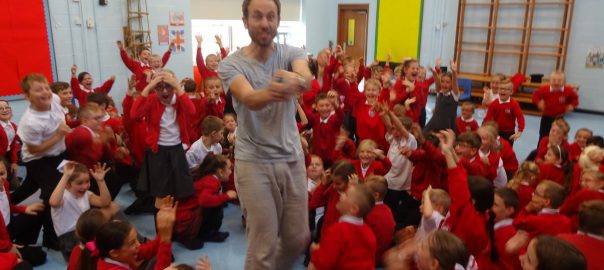
So let me shout it from the rooftops “I do primary school visits!”.  I offer my assemblies, class group workshops and event day bookings (National Storytelling Week, World Book Month, school fetes, Well Being Days, school library openings etc).  In schools I have worked one to one with children or with as many as 500 children in a sitting!  I have been to schools for an hour I have done residencies.  I can offer traditional tales and published stories including Roald Dahl and Dennis the Menace and I can be as interactive as you like depending on the needs of the group.  I have never written a book but I can guarantee that primary school children will enjoy my sessions and be inspired by my sessions (they may even learn something about writing stories!).

“The whole day was great from start to finish. Working with you has been a pleasure and we were really grateful for how flexible and accommodating you were with both your time and the topics you covered. Speaking to children from across the school after the event itself they thoroughly enjoyed it and are already asking when you will be coming back”.

Literacy coordinator, Wyvil Primary School, May 2018

https://youtu.be/-j41dozk06g

Schools and school visits have been a big part of my professional life and as the nation goes back to school full of hopes and ambitions for the year ahead it’s my hope that it won’t be long before I’m off to do my first school visits of the new academic year.

For more information about my work please review my FAQs or to make an enquiry contact me.


My adventure with Dennis continues! #dennis2018

In March 1951 Dennis the Menace and his dog Gnasher made their first appearance in The Beano.  Dennis, the trouble making school boy who terrorised his arch enemy Walter, proved popular with readers and soon became the Beano’s most famous character and their longest running comic strip.  As the world has changed so too has Dennis and as he approaches 70 years old Dennis, with his trademark black spiky hair and red and black striped jumper, is now more than a comic book hero, he’s a British institution.

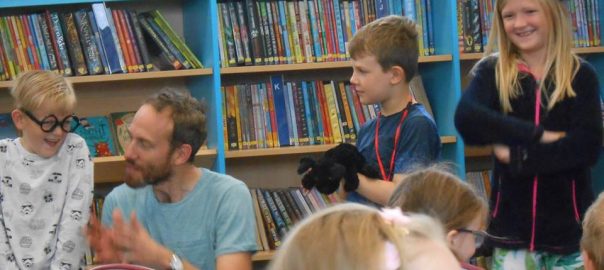
In the summer of 2018 Dennis and his Beanotown friends supported The Summer Reading Challenge; a national reading scheme encouraging children to read in the school holidays and I presented Nigel Auchterlounie’s “Dennis and the Chamber of Mischief”.  To date (this blog was written in August 2018) my retelling of the story has been heard by almost 3000 children in public libraries across England.  The response from audiences and librarians has been overwhelming:

“Fantastic, lively, creative and entertaining storytelling.  Brilliant way of encouraging children to get interested in books.” Audience member, Nottingham City Libraries

“It was excellent.  A good balance of performance storytelling, great support for reading and literacy skills development…  The high level of participative activity ensures sustained engagement and enjoyment.”  Librarian, Derby City Libraries

Children have really enjoyed hearing about Dennis, joining his adventures and tackling the challenges of the Chamber of Mischief.  They have left our sessions buzzing about reading and the potential of books.  The response in cyberspace has been equally positive with lots of parents, grandparents and libraries taking to social media to share photographs and feedback using the #dennis2018.  It may have been a long, hot summer but Dennis has made it very enjoyable.

Now, with the kind support of Bonnier Publishing, I am pleased to announce that this storytelling session is to be made available for school assemblies and events.  For the next ten months teachers will be able to introduce the zaniness of Beanotown to their classes as Dennis helps us encourage and inspire a love of reading.

Nigel Auchterlounie’s “Dennis and the Chamber of Mischief” is published by Studio Press and is available through all good bookshops and public libraries.  If you are interested in my retelling of the story I will be visiting Bolton Libraries and participating in the Loogabarooga Festival in Loughborough during October.  If you’d like Dennis and the Chamber of Mischief to visit your school or event contact me.